

TL;DR
Common IFRS 17 myths create unnecessary fear about this insurance accounting standard. You’ll discover the truth behind eight widespread misconceptions, including beliefs that it only applies to insurers, always reduces profits, and harms credit ratings. This guide separates facts from fiction about scope exceptions, business model impacts, and complexity concerns. Learn why IFRS 17 in the UAE offers strategic opportunities beyond compliance and how smaller insurers can implement it successfully.
The insurance industry has been buzzing with confusion about IFRS 17 since its global implementation began in 2023.
You’ve probably heard conflicting information about this transformative accounting standard, leaving you wondering what’s actually true.
IFRS 17 myths continue to spread across boardrooms in the UAE, Saudi Arabia, and beyond, creating unnecessary anxiety among insurance professionals.
These persistent IFRS 17 myths often stem from incomplete information and hasty generalizations about the standard’s requirements.
The reality is far different from these misconceptions, and understanding the facts can transform how you approach this regulatory shift.
Asia-wide IFRS 17 adoption varies significantly, with Hong Kong, Singapore, South Korea, Malaysia, and Taiwan successfully adopting the standard by January 1, 2023, while China and India deferred implementation to 2025 or 2026 due to complexity and local regulatory adjustments.
This mixed adoption pattern has created an information vacuum filled with speculation rather than facts.
Let’s cut through the noise and address the most persistent IFRS 17 myths that continue to misguide insurance professionals worldwide.
These common IFRS 17 myths range from scope misunderstandings to profit impact fears.
Understanding IFRS 17 Myths: What Is IFRS 17? Key Facts for Insurers
IFRS 17 represents the most significant change in insurance accounting in decades. This comprehensive standard replaces the outdated IFRS 4, which allowed insurance companies to use inconsistent accounting practices across different markets.
The standard introduces three distinct measurement models:
- The General Measurement Model serves as the foundation
- The Premium Allocation Approach simplifies accounting for short-duration contracts
- The Variable Fee Approach specifically addresses contracts with direct participation features.
Why Was IFRS 17 Introduced?
Insurance contracts were the last major area of accounting without consistent global standards. Before IFRS 17, you could find dramatically different accounting treatments for similar insurance products across countries and companies.
The International Accounting Standards Board recognized this gap created problems for investors trying to compare insurance companies.
Financial statements lacked the transparency needed for informed decision-making, particularly when evaluating insurers operating in multiple jurisdictions.
IFRS 17 addresses these issues by requiring current measurement of insurance liabilities. The standard focuses on providing relevant information about an insurer’s financial position and performance, making it easier for stakeholders to assess profitability and risk.
How Does IFRS 17 Differ From IFRS 4?
The differences between IFRS 17 vs IFRS 4 are fundamental rather than superficial. IFRS 4 allowed companies to continue using their existing accounting policies for insurance contracts, leading to a patchwork of different approaches globally.
IFRS 17 introduces uniform measurement requirements based on current estimates. Instead of recognizing profit immediately upon contract inception, the new standard defers profit recognition through the Contractual Service Margin mechanism.
This creates a more realistic representation of how insurance businesses generate value over time.
The first financial reports applying IFRS 17 were released between January and May 2024, varying by insurer reporting requirements, giving us real-world evidence of the standard’s practical impact.
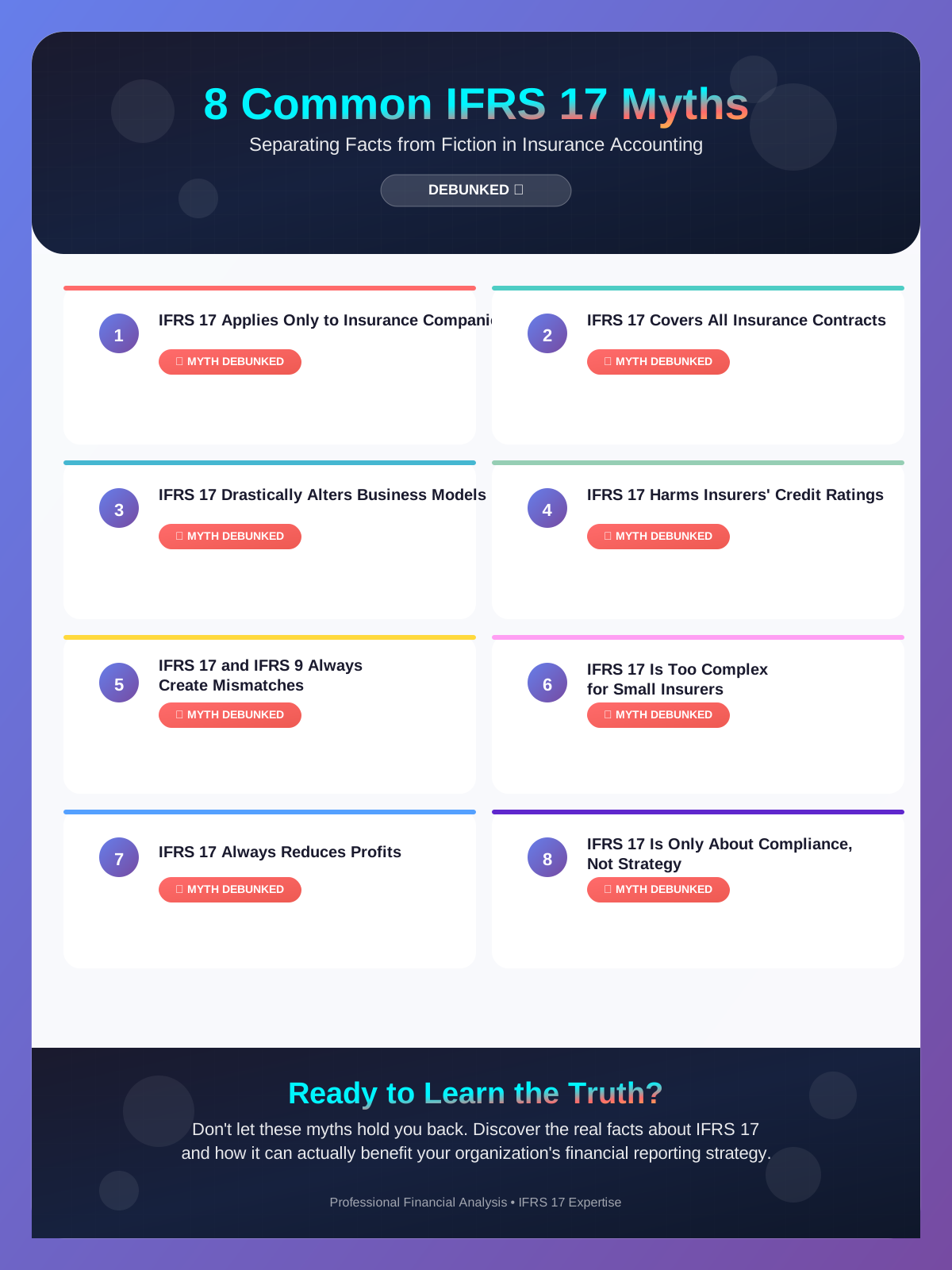
Myth 1: IFRS 17 Applies Only to Insurance Companies
This misconception stems from the standard’s name and primary focus. Many professionals assume that only traditional insurance companies need to worry about IFRS 17 compliance, but this thinking misses critical applications.
IFRS 17 applicability depends on contract characteristics, not company type. Any entity issuing contracts that transfer significant insurance risk must apply the standard, regardless of their primary business model or regulatory classification.
Banks offering credit protection products, manufacturers providing extended warranties, and even technology companies with certain service agreements may find themselves within IFRS 17’s scope.
The key factor is whether the contract transfers significant insurance risk from the policyholder to the issuer.

Financial institutions in the UAE and Saudi Arabia have discovered this reality during their IFRS 17 implementation projects.
Several banks found that certain credit card protection products and loan guarantee arrangements required IFRS 17 treatment.
Myth 2: IFRS 17 Covers All Insurance Contracts
This widespread IFRS 17 misconception suggests the standard applies universally to every contract labeled as “insurance.”
This oversimplification has led many organizations to prepare for broader implementation than actually required. Such IFRS 17 myths about universal coverage ignore the standard’s specific scope limitations.
The reality involves numerous exceptions and choices that can significantly impact your compliance requirements.
Understanding these nuances helps you focus implementation efforts on contracts that genuinely require IFRS 17 treatment.
Exceptions: Fixed-Fee Service Contracts
Many contracts labeled as “insurance” are actually fixed-fee service contracts that fall outside IFRS 17’s scope.
These arrangements involve providing services for predetermined fees rather than transferring significant insurance risk.
Extended warranty contracts often fall into this category when the service provider’s obligation is limited to repair or replacement services.
If the fee covers expected service costs plus a reasonable profit margin without substantial risk transfer, IFRS 15 may be the appropriate standard instead.
The distinction requires careful analysis of contract terms and the nature of risks involved. Organizations have the option to apply either IFRS 15 or IFRS 17 to certain contracts, making this choice a strategic consideration during implementation.
Exceptions: Financial Guarantee Contracts
Financial guarantee contracts present another area where IFRS 17 application isn’t automatic. These contracts require the guarantor to make payments if a debtor fails to meet obligations, but they may fall under different accounting standards depending on specific circumstances.
If you issue financial guarantee contracts while selling goods or services, IFRS 15 typically applies.
When these contracts are issued for consideration and don’t fall under other specific requirements, you can choose between IFRS 17 and IFRS 9 treatment.
This choice impacts measurement approaches significantly. IFRS 9 focuses on expected credit losses, while IFRS 17 applies the full insurance contract framework including profit deferral mechanisms.
Exceptions: Credit Card and Similar Contracts
Credit card protection products illustrate the complexity of IFRS 17 scope determinations. Not all credit-related insurance products automatically require IFRS 17 treatment, despite appearing to provide insurance coverage.
The key test involves assessing whether the contract transfers significant non-financial risk. Simple credit protection that only covers payment defaults may not meet this threshold, particularly if the coverage is closely tied to the underlying credit facility’s terms.
Banks in Pakistan and other markets have found that detailed contract analysis often reveals these products require different accounting treatments than initially expected.
This discovery has allowed institutions to simplify their IFRS 17 implementation scope.
Myth 3: IFRS 17 Drastically Alters Business Models
Fear about business model disruption represents one of the most paralyzing IFRS 17 myths affecting insurance executives.
This particular myth among IFRS 17 myths has led some organizations to postpone strategic initiatives while awaiting implementation clarity.
The truth is that IFRS 17 primarily changes financial reporting and presentation rather than fundamental business operations.
Your underwriting processes, pricing methodologies, and claims management procedures remain largely unchanged.
The Reality of Business Model Changes
IFRS 17 implementation prompts a significant transformation in insurance accounting, requiring granular historical data and increased transparency, but these changes support rather than replace existing business practices.
The standard provides better information for decision-making without dictating how you conduct business.
Product development continues following the same risk assessment and market analysis principles you’ve always used.
The main difference lies in how you measure and report the financial impact of these activities to stakeholders.
Customer relationships remain unaffected by accounting standard changes. Your policyholders continue receiving the same coverage and service levels regardless of how you account for contracts internally.
Steps to Adapt Without Major Disruption
Successful adaptation focuses on enhancing data collection and reporting capabilities rather than restructuring core business processes.
Start by identifying information gaps between current systems and IFRS 17 requirements.
Implementation in Dubai has influenced existing insurance contract pricing strategies notably since early 2025, but these influences reflect improved data availability rather than forced business model changes. Companies are making better-informed decisions using enhanced analytical capabilities.
Cross-functional collaboration becomes more important under IFRS 17, as actuarial and finance teams must work more closely together.
This collaboration improves business insights and decision-making quality, providing competitive advantages beyond compliance.
Myth 4: IFRS 17 Harms Insurers’ Credit Ratings
Rating agency concerns represent another persistent myth that creates unnecessary anxiety among insurance executives.
This enduring entry in the catalog of IFRS 17 myths suggests that implementation will automatically damage credit ratings.
Many professionals fear that IFRS 17 implementation will negatively impact their organization’s creditworthiness and borrowing capacity.
Credit rating agencies have repeatedly clarified their position on IFRS 17, stating that accounting standard changes don’t automatically affect credit ratings.
These agencies look beyond accounting presentations to assess underlying business fundamentals.
Does IFRS 17 Impact Credit Ratings?
Rating agencies focus on cash flow generation, capital adequacy, and business quality rather than accounting presentations.
IFRS 17 doesn’t change the underlying economics of insurance contracts or an insurer’s ability to generate cash flows.
The enhanced transparency provided by IFRS 17 may actually support credit ratings by giving agencies better insight into business performance.
Improved disclosure requirements help rating analysts understand risk profiles and profitability drivers more clearly.
Some insurers may see temporary rating pressure during the implementation transition period, but this typically reflects execution concerns rather than fundamental business deterioration. Well-managed implementations often receive positive recognition from rating agencies.
What Rating Agencies Focus On Under IFRS 17
Capital adequacy remains the primary rating consideration regardless of accounting standards. IFRS 17 doesn’t change regulatory capital requirements or solvency positions, so this key metric continues operating independently of financial reporting changes.
Business diversification, market position, and operational efficiency continue influencing credit ratings as they always have.
Rating agencies understand that accounting standard changes don’t alter these fundamental business characteristics.
Cash flow predictability and earnings quality may actually improve under IFRS 17 due to enhanced disclosure requirements.
This improved transparency can support credit ratings by reducing uncertainty about business performance and risk exposure.

Myth 5: IFRS 17 and IFRS 9 Always Create Mismatches
The relationship between IFRS 17 and IFRS 9 has generated significant concern about accounting mismatches. Many professionals assume these standards inevitably create volatility that doesn’t reflect economic reality.
While coordination challenges exist, proper implementation can minimize mismatches and may even improve the alignment between asset and liability accounting. The key lies in understanding how these standards work together rather than viewing them as conflicting requirements.
The Link Between IFRS 17 and IFRS 9
Both standards emphasize current market valuations, creating natural alignment in their basic approach to measurement. IFRS 17 requires current discount rates for insurance liability measurement, while IFRS 9 applies fair value or amortized cost approaches to financial assets.
The timing of recognition can create short-term volatility, but this often reflects genuine economic changes rather than artificial accounting effects.
When interest rates change, both asset values and liability discount rates move in economically logical directions.
Long-term strategic asset allocation decisions become more important under the combined impact of both standards.
Organizations must consider how their investment strategies interact with liability characteristics to minimize unnecessary volatility.
How to Manage Mismatches With Proper Alignment
Asset-liability matching strategies help minimize volatility from IFRS 17 and IFRS 9 interactions.
By aligning asset duration and characteristics with liability profiles, you can reduce the impact of market movements on your financial statements.
The Variable Fee Approach under IFRS 17 specifically addresses situations where policyholders share in underlying asset performance.
This approach helps maintain accounting alignment for participating products and variable annuities.
Risk management practices may need adjustment to address the combined impact of both standards.
This often involves more sophisticated hedging strategies and closer monitoring of duration gaps between assets and liabilities.
Myth 6: IFRS 17 Is Too Complex for Small Insurers
Complexity concerns disproportionately affect smaller insurance companies, with many assuming IFRS 17 requirements are designed only for large, sophisticated insurers.
These particular IFRS 17 myths have prevented some smaller companies from beginning implementation planning.
Such misconceptions about IFRS 17 complexity overlook the standard’s built-in simplifications.
The reality is that IFRS 17 includes specific simplifications designed for smaller insurers and less complex products.
Understanding these options can significantly reduce implementation burden and ongoing compliance costs.
Simplifying IFRS 17 for SMEs in the UAE
The Premium Allocation Approach offers significant simplification for contracts with coverage periods of one year or less.
This approach allows smaller insurers to avoid complex actuarial calculations while still meeting IFRS 17 requirements.
Many UAE-based insurers focusing on motor insurance, short-term property coverage, or travel insurance can apply this simplified approach to most of their business. This dramatically reduces implementation complexity and ongoing compliance costs.
Proportional application allows smaller insurers to implement IFRS 17 gradually rather than requiring full compliance across all contracts simultaneously.
This approach helps manage resource constraints and implementation costs.
Read more about IFRS 17 GCC implementation by clicking on the link.
Practical Steps Smaller Insurers Can Take
Start with a thorough scope assessment to identify which contracts actually require IFRS 17 treatment.
Many smaller insurers discover their implementation requirements are more limited than initially expected.
Technology solutions specifically designed for smaller insurers have emerged in markets like Germany and other European countries.
These tools provide IFRS 17 compliance capabilities without requiring massive system overhauls or extensive actuarial resources.
Consider outsourcing complex calculations to specialized service providers while maintaining control over business decisions and reporting.
This approach allows smaller companies to achieve compliance without building extensive internal capabilities.
Myth 7: IFRS 17 Always Reduces Profits
Profit impact fears represent perhaps the most emotionally charged among all IFRS 17 myths affecting insurance executives.
Many professionals assume the standard will automatically reduce reported profitability, leading to stakeholder concerns and competitive disadvantages.
This particular fear demonstrates how IFRS 17 myths can create unnecessary business anxiety.
The reality is more nuanced, with profit timing changes rather than permanent reductions being the primary impact for most insurers.
Understanding these timing differences helps explain why lower initial profits can actually signal stronger business insights.
Understanding Profit Recognition in IFRS 17
The Contractual Service Margin mechanism defers profit recognition until insurance services are provided, creating more realistic timing of earnings recognition.
This approach aligns accounting with the actual delivery of value to policyholders.
Front-loading of profits under previous standards often created misleading impressions of business performance.
IFRS 17’s approach provides better insight into ongoing profitability and business sustainability.
Long-term profit recognition may actually increase under IFRS 17 for profitable contracts, as the standard eliminates some of the conservative provisions required under previous frameworks. The key difference lies in timing rather than total amount.
Why Lower Profits Can Signal Stronger Insights
Enhanced data requirements under IFRS 17 often reveal business insights that weren’t visible under previous accounting standards.
These insights can identify unprofitable products or customer segments that were previously subsidized by profitable business.
A 2025 survey shows insurers remain challenged by legacy system conflicts and data fragmentation affecting IFRS 17 compliance accuracy, but companies addressing these challenges often discover significant business improvement opportunities.
Better measurement of contract profitability supports more informed pricing decisions and product development strategies.
This improved decision-making capability often leads to better long-term financial performance despite different short-term reporting patterns.
Myth 8: IFRS 17 Is Only About Compliance, Not Strategy
The compliance-focused view of IFRS 17 represents one of the most limiting myths affecting insurance organizations.
This perspective treats the standard as a regulatory burden rather than recognizing its strategic potential.
Forward-thinking insurers are discovering that IFRS 17 compliance creates valuable business intelligence capabilities that extend far beyond regulatory requirements.
These strategic applications often justify implementation costs through improved business performance.
Strategic Opportunities Hidden Within Compliance
Enhanced data collection requirements for IFRS 17 create detailed product profitability analysis capabilities that many insurers never possessed before implementation. This information supports better pricing decisions and product development strategies.
Customer segment profitability becomes more visible under IFRS 17’s granular measurement requirements.
Organizations can identify high-value customer relationships and adjust marketing strategies accordingly.
Risk management capabilities often improve significantly during IFRS 17 implementation as companies develop better understanding of their contract characteristics and exposure profiles. This improved risk insight supports better business decision-making across multiple areas.
How Insurers Can Build Competitive Advantage
Data analytics capabilities developed for IFRS 17 compliance often support advanced business intelligence applications.
Companies can use these capabilities for predictive modeling, customer behavior analysis, and market trend identification.
Process automation implemented during IFRS 17 projects frequently improves operational efficiency beyond compliance requirements.
These improvements often reduce costs and improve customer service delivery.
Stakeholder communication benefits from IFRS 17’s enhanced transparency requirements.
Companies that effectively explain their business model and performance often enjoy improved investor relations and market confidence.

Key Takeaways for Insurers
Understanding the truth behind these IFRS 17 myths allows insurance professionals to approach implementation with realistic expectations and strategic focus.
The standard represents a significant change, but one that brings opportunities alongside compliance requirements. Debunking these IFRS 17 myths reveals that most concerns stem from misunderstanding rather than genuine implementation barriers.
Most implementation challenges stem from data and system limitations rather than fundamental business conflicts with IFRS 17 requirements.
Organizations that address these technical challenges systematically often find implementation more manageable than initially expected. Separating facts from IFRS 17 myths helps companies focus resources on genuine implementation needs.
Post-Implementation Focus Areas
Operational excellence becomes more visible under IFRS 17’s enhanced measurement and disclosure requirements. Companies must focus on delivering consistent, high-quality service to meet the transparency expectations created by the new standard.
Stakeholder communication strategies need updating to help investors, regulators, and other stakeholders understand the implications of IFRS 17 changes.
Clear explanation of business model impacts and performance metrics helps maintain confidence during the transition period.
System improvements often continue beyond initial implementation as companies identify additional automation and integration opportunities.
These ongoing enhancements frequently provide operational benefits that justify the initial implementation investment.
Opportunities Beyond Regulatory Compliance
IFRS 17 advisory services and specialized consulting support can help organizations identify value-creation opportunities within their compliance projects.
This strategic approach transforms regulatory requirements into business advantages.
Competitive differentiation opportunities emerge for companies that successfully communicate their business model and performance under IFRS 17.
Enhanced transparency can support market positioning and investor relations strategies.
Partnership development often accelerates during IFRS 17 implementation as companies work with technology providers, consultants, and other service providers.
These relationships frequently create ongoing business benefits beyond the implementation period.
FAQs About IFRS 17 Myths
Is IFRS 17 Mandatory in the UAE and KSA?
Yes, IFRS 17 is mandatory for insurance companies in both the UAE and Saudi Arabia, with implementation required from January 1, 2023.
However, specific application requirements may vary based on local regulatory guidance and company circumstances.
The UAE’s Securities and Commodities Authority and Saudi Arabia’s Capital Market Authority have both confirmed IFRS 17 adoption requirements for listed insurance companies.
Private insurers may also be required to apply the standard depending on local regulations and stakeholder requirements.
How Long Does IFRS 17 Implementation Take?
Typical IFRS 17 implementation projects require 18 to 36 months depending on company size, system complexity, and business scope.
Smaller insurers with simple products may complete implementation faster, while large, complex organizations often require longer timeframes.
The implementation timeline depends heavily on data availability and system capabilities. Companies with robust actuarial systems and historical data often progress more quickly than those requiring significant infrastructure development.
Also, clearing up the common IFRS 17 myths helps you avoid strategic mistakes during your implementation planning.
How Insurers can address IFRS 17 Myths
Data management represents the most common implementation challenge, as IFRS 17 requires granular historical information that many companies didn’t previously collect. System integration between actuarial and financial reporting platforms also creates significant technical challenges.
Resource allocation challenges affect many implementations, as companies must balance ongoing business operations with project demands.
Change management across finance, actuarial, and IT departments requires careful coordination and communication.
The path forward with IFRS 17 doesn’t have to be filled with uncertainty and confusion. By separating facts from fiction, you can approach this transformative standard with confidence and strategic focus.
The insurance professionals who succeed with IFRS 17 are those who see beyond compliance requirements to identify the business value hidden within regulatory change.
Overcoming IFRS 17 myths positions your organization for long-term competitive advantage in an increasingly transparent marketplace.
Ready to transform your IFRS 17 compliance into a strategic advantage? Prima Consulting’s specialized team helps insurance companies across the UAE, Saudi Arabia, and global markets navigate IFRS 17 implementation while building lasting competitive advantages.
Contact us today to discover how we can turn your regulatory requirements into business opportunities.
And if you are looking for a tailored IFRS 17 Compliance Solution, please check out our Delta IFRS 17 software.


