
Prima Consulting delivers end-to-end IFRS 17 implementation for insurers in Saudi Arabia, the UAE, and Pakistan, from gap analysis through actuarial modeling to system integration.












































Three years past the effective date, most insurers have completed a first-year close under IFRS 17. What separates firms in good standing from firms still fighting the numbers is not whether they adopted the standard. It’s whether their data, actuarial models, and systems can produce a clean close every quarter without a scramble.
Regulatory attention has not eased. ADGM’s FSRA rolled out insurance framework enhancements in April 2026 specifically to operationalize IFRS 17 for ADGM-licensed insurers, a sign that regulators across the region continue tightening enforcement rather than relaxing it.
| Milestone | Market | Status |
|---|---|---|
| 1 January 2023 | Saudi Arabia (SAMA) | Full mandatory compliance, no phasing |
| 1 January 2023 | UAE (CBUAE) | Enforced after a 2019–2021 three-phase rollout |
| April 2026 | ADGM (FSRA) | Framework enhancements to operationalize IFRS 17 |
| SRO 1715/2023, since amended | Pakistan (SECP) | Four-phase adoption; revised date pending confirmation |
Business pressure hasn’t eased either. Talent that understands both actuarial modeling and IFRS 17 disclosure is scarce across the region. Audit findings from a rushed first implementation are now surfacing in year-two and year-three reviews.
What teams need: A single data model that both actuarial and finance can trust without a manual bridge.
How Prima solves it: Prima's gap analysis maps every divergence between current practice and IFRS 17 requirements before implementation starts.
What teams need: Actuarial and financial reporting systems that talk to each other.
How Prima solves it: Prima implements and integrates the systems required for IFRS 17 compliance, including Delta where a purpose-built platform is the right fit.
What teams need: Staff who can run IFRS 17 reporting without calling a consultant every quarter.
How Prima solves it: Prima trains actuarial and finance teams to implement and maintain IFRS 17 compliance independently.
What teams need: A clear inventory of policy, claims, and reinsurance data across legacy systems.
How Prima solves it: Prima migrates and transforms existing data into an IFRS 17-ready structure with full traceability.
What teams need: Actuarial and financial models that produce consistent, defensible fulfilment cash flows.
How Prima solves it: Prima's actuarial and financial modeling services measure insurance liabilities and project cash flows under the general model, PAA, or VFA, whichever applies to your contracts. For a worked view of how the CSM is built, see Prima's IFRS 17 calculation example.
What teams need: A factual, current picture of where the company stands against regulatory expectations.
How Prima solves it: Prima's contractual cash flow projections and disclosure support give finance leadership a defensible, board-ready compliance position.
| Feature | What It Means for Your Operations |
|---|---|
| IFRS 17 gap analysis | Know exactly where current practice diverges from the standard before you commit budget to fixing it. |
| Data migration and transformation | Move policy, claims, and reinsurance data into an IFRS 17-ready structure without losing audit trail. |
| System implementation and integration | Get actuarial and financial reporting systems, including Delta, working together instead of in parallel spreadsheets. |
| Actuarial and financial modeling | Receive fulfilment cash flow and CSM calculations built on documented, auditable assumptions. |
| Contractual cash flow projections | Produce projections that reconcile quarter to quarter, reducing audit queries. |
| Training and staff development | Equip your own actuarial and finance staff to run IFRS 17 reporting without ongoing dependency on outside consultants. |
| Step 1: Gap Analysis |
Prima reviews current actuarial, accounting, and data practices against IFRS 17 requirements. This phase identifies every divergence before implementation starts. | OUTPUT: A documented gap report with a prioritized remediation roadmap. |
| >>> | ||
| Step 2: Data Readiness |
Prima assesses and migrates the data required for IFRS 17 calculations, mapping legacy exports field by field and building validation checkpoints into the migration. | OUTPUT: A validated, IFRS 17-ready data set with full lineage documentation. |
| >>> | ||
| Step 3: Actuarial and System Design |
Prima builds or configures the actuarial models and systems needed to calculate the CSM, risk adjustment, and fulfilment cash flows under the general model, PAA, or VFA. | OUTPUT: A working model, tested against your historical data. |
| >>> | ||
| Step 4: Parallel Run and Validation |
Prima runs the new model alongside existing reporting to confirm results reconcile, with assumptions documented and outputs traceable for external review. | OUTPUT: A validated close, ready for external audit. |
| >>> | ||
| Step 5: Training and Handover |
Prima trains your actuarial and finance teams to operate the process independently, with role-specific documentation staff can reference after the engagement ends. | OUTPUT: Documented procedures and a team capable of running the next close without Prima in the room. |
Long-duration contract measurement, discount rate sensitivity, and CSM amortization over decades-long coverage periods.
Participant fund segregation and surplus distribution treatment under IFRS 17, an area few regional advisory firms address directly.
Premium allocation approach eligibility, onerous contract testing, and shorter coverage-period disclosure.
Scoping which product lines fall under IFRS 17 versus other standards.
Ceded reinsurance contract measurement, aligned to the underlying direct contracts they reinsure — supported by Prima's reinsurance consulting team.
Reconciling SAMA, CBUAE, and SECP reporting expectations under one consistent internal methodology.
An insurer still reconciling IFRS 17 manually isn’t saving money. It’s deferring cost into the next audit cycle, when a qualified opinion or a regulator query is far more expensive to fix than a planned gap analysis would have been. Many of these traps are avoidable once you know the common IFRS 17 implementation challenges going in.
Key-person dependency is the quieter risk. When the one actuary who understands your CSM roll-forward leaves, the process leaves with them, and the next close starts from zero.
IFRS 17 consulting is not an administrative cost. It is the infrastructure that keeps your quarterly close, your audit relationship, and your regulator relationship all functioning without a fire drill.

Most insurers are surprised by at least one gap once Prima runs the numbers. Book a free assessment and find out where yours stands.
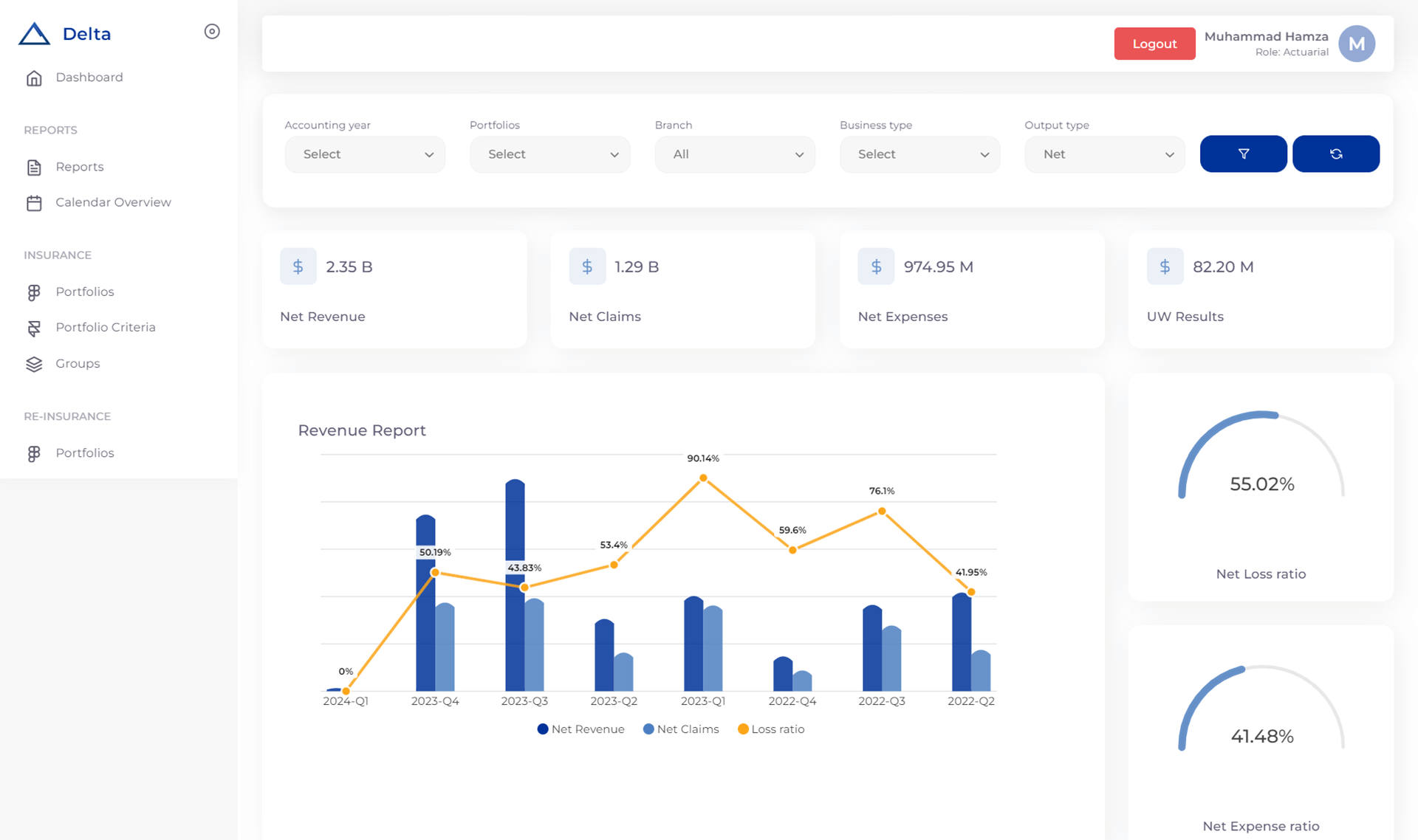
Delta is a cloud-based financial system designed for the insurance industry, ensuring full compliance with IFRS 17.
Our IFRS 17 Software offers robust features for insurance accounting, helping companies meet insurance standards efficiently.
IFRS 17 is the global accounting standard for insurance contracts, effective since 1 January 2023. It requires insurers to measure contracts using current assumptions and recognize profit through the Contractual Service Margin rather than upfront. For a full explanation of the standard, see Prima's IFRS 17 guide.
A gap analysis compares your current actuarial, accounting, and data practices against IFRS 17 requirements. Prima delivers a documented report with a prioritized roadmap, typically within a few weeks of kickoff.
Cost depends on the size of your policy book, the number of contract groups, and how much of your data infrastructure needs rebuilding versus adapting. Prima scopes cost after an initial gap analysis, not before.
Timeline depends on data readiness and the complexity of your product portfolio. A gap analysis is usually the fastest way to get a realistic project timeline rather than a generic industry estimate.
Both. Prima supports full project-based implementation and ongoing managed IFRS 17 support for insurers who want continued access to actuarial and reporting expertise after go-live.
External audit and IFRS 17 implementation consulting are different engagements, and most insurers use separate firms for each to preserve audit independence. Prima focuses on implementation, data, and actuarial modeling, not statutory audit.
The right advisor combines actuarial modeling capability with regional regulatory knowledge of SAMA, CBUAE, and SECP requirements. Prima's team covers both, alongside its own Delta software platform for firms that need a system, not just advice.
Regional insurers often need a platform configured for SAMA, CBUAE, and SECP-specific disclosure requirements, which global platforms handle generically. Delta, Prima's own IFRS 17 platform, is built and supported regionally, with named live deployments at insurers including Atlas and IGI Insurance.
IFRS 4 allowed diverse local accounting practices for insurance contracts, while IFRS 17 imposes one consistent, principles-based measurement model globally. For a full comparison with worked examples, see Prima's IFRS 17 vs IFRS 4 guide.
Yes. Takaful operators must apply IFRS 17 to their insurance contracts, with additional complexity around participant fund segregation and surplus distribution that conventional insurers don't face. Prima addresses this directly in its Takaful engagements.
IFRS 17 applies to any embedded insurance products a bank issues, not to banking activities generally. Banks need to assess their product portfolios to determine which lines fall under IFRS 17 scope.
Saudi Arabia and the UAE have required full IFRS 17 compliance since 1 January 2023 with no phased exceptions. Pakistan adopted IFRS 17 via SECP's SRO 1715 of 2023 on a four-phase timeline, since adjusted by a further SECP notice; insurers there should confirm their current applicable date directly with SECP.
For insurers with a clean first implementation, ongoing compliance is largely operational. For insurers whose first close relied on manual workarounds, closing that gap now is usually more complex than doing it right the first time would have been, which is why a lot of Prima's current IFRS 17 work is remediation, not first-time implementation.
IFRS 17 rarely sits alone on an audit. Prima handles the connected standards under one team:
Regulatory expectations are rising. Actuarial models built for a first-year close need recalibration, and disclosure that passed audit in 2023 won't pass in 2027. Whether you're closing a gap from your first implementation or scaling an existing framework, Prima Consulting provides the documentation, validated results, and regulatory alignment your institution needs across KSA, UAE, Pakistan, Germany, Ireland, and the wider region.
Ready to elevate your business with Prima Consulting? Fill out the form below to discuss your needs with our experts and discover how we can help you achieve your business goals.
We Schedule a call at your convenience
We do a discovery and consulting meeting
We prepare a proposal
Regulatory Compliance Notice
Our services are delivered in accordance with applicable laws and regulations in each jurisdiction.
Prima Consulting provides its services and engages in accordance with the local applicable laws, regulations, professional standards, and regulatory requirements of the jurisdiction in which each service is performed.
Thus, our services are delivered through the appropriate Prima network firm, office or, where required, an appropriately licensed or authorised professional partner. Where a service is not to be provided by one Prima Consulting entity, it may be provided through another Prima Consulting entity or an appropriately authorised third party or not at all for some services, subject to applicable laws and regulations and we ensure strict compliance in this regard.
Nothing on this website constitutes a representation that any particular Prima Consulting entity is licensed or authorised to provide every service in every jurisdiction. Regulatory permissions and service eligibility are assessed on a service-by-service and jurisdiction-by-jurisdiction basis. This is done to ensure compliance in the face of changing local and global trends in laws, regulations and standard best practices.
The user of this website by entering accepts that such services shall be sought and procured through official legal channels appropriate and allowed for such service. In case of any ambiguity in this regard, it is strongly advisable to seek help from professionals or our team.