TL;DR
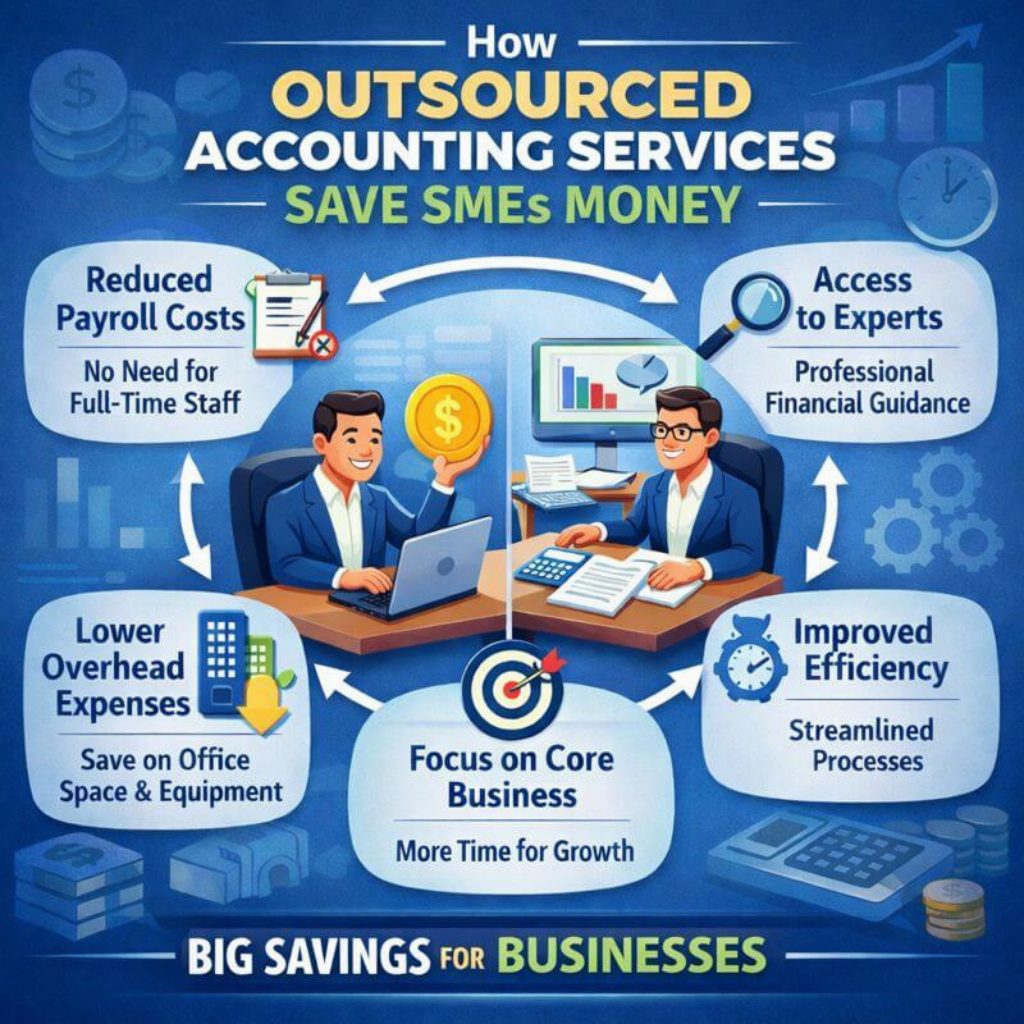
Outsourced accounting services can reduce your SME’s finance costs by 20-60% while improving accuracy and compliance. You’ll discover how finance outsourcing eliminates overhead expenses like salaries, training, and software costs that drain your budget. This guide covers the key benefits of accounting BPO in the UAE, compares in-house versus outsourced costs, and shows you which services to outsource for maximum savings. Learn how to choose the right partner and start cutting your accounting expenses today.
Construction companies across the UAE, Pakistan, Saudi Arabia, and Germany face mounting pressure in getting IFRS 15 construction revenue recognition right.
You’re dealing with complex long-term contracts. Variable pricing creates headaches. Performance obligations can make or break your financial reporting.
The stakes are high. One construction company reported US$5.9 billion in remaining performance obligations in their 2024 SEC filing. That’s 58% expected within 12 months.
Getting this wrong triggers regulatory scrutiny. It sparks investor concerns.
This guide breaks down IFRS 15 accounting for construction contracts. You’ll get practical terms that work.
You’ll learn how to apply IFRS 15 in building projects. Master the revenue recognition methods. Avoid costly compliance mistakes that plague contractors worldwide.
What Is IFRS 15 Construction Revenue Recognition and Why It Matters
IFRS 15 “Revenue from Contracts with Customers” changed everything for construction companies starting January 1, 2018.
Before IFRS 15, you used IAS 11 for construction contracts. You used IAS 18 for service agreements. Now, all revenue from contract with customers follows one standard.
Contract type doesn’t matter anymore.
The core shift? Revenue recognition moved from risk-and-reward transfer to control transfer.
Here’s what that means for your projects:
- You recognize revenue when customers gain control of goods or services
- Performance obligations drive timing, not completion milestones
- Variable consideration gets constrained until it’s highly probable
Construction companies struggled with this transition. Contract assets decreased from US$70.1 million to US$60.1 million for one entity between 2023 and 2024. This shows how project progress patterns shifted under the new standard.
The impact goes beyond accounting. Cash flow projections need alignment with IFRS 15 principles. Bid strategies require updates too. Contract negotiations must follow new rules.

Regional adoption varies across markets. UAE companies must comply for financial years starting after January 1, 2018.
Pakistan adopted IFRS 15 through convergence with international standards. Saudi Arabia requires compliance through SOCPA standards.
Germany implemented IFRS 15 for publicly listed companies. Many private entities followed suit for consistency.
IFRS 15 Construction Revenue: The 5-Step Model Explained
Every construction contract follows IFRS 15’s five-step revenue recognition model. This systematic approach replaces old percentage-of-completion guesswork.
You get structured decision-making instead of uncertainty.
Step 1: Identify the Contract with the Customer
Start with contract identification. You need specific elements for validity.
You need written or oral agreement with commercial substance. Both parties must approve contract terms. Rights and payment terms must be clearly identified. You must have probability of collecting consideration.
Construction contracts often span multiple years. They include complex modification clauses. You’ll encounter bundled agreements covering design, build, and maintenance phases.
Contract combinations matter significantly. You might build three identical warehouses for one customer under separate purchase orders. You need to evaluate whether they’re one contract or three separate ones.
The key test centers on commercial objectives. Do the contracts share the same commercial objective? Were they negotiated as a package deal?
Step 2: Identify Performance Obligations
Performance obligations are promises to transfer distinct goods or services. You make these promises to customers.
In construction, this gets tricky fast. You might deliver multiple components. Building construction typically creates one integrated obligation. Design services might be separate if they’re distinct.
You might also handle equipment installation. Post-completion maintenance creates another obligation.
Most construction projects create one performance obligation. The building components aren’t distinct items. Customers can’t use a foundation without walls. They can’t use walls without a roof.
Exception exists for design services. When you provide design services that customers could use with other contractors, that’s likely separate. It becomes a distinct performance obligation.
Step 3: Determine the Transaction Price
Transaction price includes all consideration you expect to receive. Fixed-price contracts seem straightforward.
But construction involves multiple components. You deal with base contract price and variable consideration like bonuses and penalties. Change orders and claims create complexity. Financing components matter if payment terms exceed 12 months.
Variable consideration requires careful estimation. You can use expected value method with probability-weighted amounts. You can use most likely amount method with single best estimate.
The constraint rule applies here. Only include variable consideration when it’s highly probable. Future revenue reversals can’t occur.
Step 4: Allocate the Transaction Price
If you have multiple performance obligations, allocate transaction price. Base allocation on standalone selling prices.
Most construction contracts have one performance obligation. This makes allocation unnecessary.
When allocation is needed, use market prices if available. Otherwise, estimate using cost-plus margin approaches. You can use residual approaches too.
Step 5: Recognize Revenue When (or As) Performance Obligations Are Satisfied
This step determines timing completely. Revenue recognition happens in two ways.
You can recognize over time for most construction projects. You can recognize at a point in time, but this rarely applies in construction.
Three criteria allow over-time recognition:
- Customer receives and consumes benefits as you perform work
- Customer controls the asset as you create it
- You create an asset with no alternative use and have enforceable payment rights
Construction projects typically meet criterion 2 or 3. This triggers over-time recognition automatically.
How to Identify Construction Contracts Under IFRS 15
Contract identification shapes your entire revenue recognition approach.
You’ll deal with various contract types in construction:
- Fixed-price contracts
- Cost-plus arrangements
- Time and materials agreements
- Hybrid pricing models
Each requires different analysis. Fixed-price contracts need careful variable consideration assessment. Cost-plus arrangements rarely have variable consideration but require margin recognition patterns.
Modification frequency complicates identification. Change orders are standard in construction. Evaluate whether modifications create new contracts or adjust existing ones.

New contract criteria:
- Modification adds distinct goods/services
- Price increase reflects standalone selling prices
Otherwise, treat modifications as contract adjustments, potentially requiring cumulative catch-up adjustments.
Multiple contracts with the same customer need combination analysis. Three hospitals built simultaneously for one healthcare system might represent one contract if negotiated together with interdependent pricing.
Determining and Allocating the Transaction Price
Transaction price determination affects every dollar you’ll recognize. Start with the stated contract amount. Then adjust for specific components.
Variable Consideration
Bonuses for early completion create variable consideration. You must estimate using historical completion data. Use current project circumstances too.
Penalties for delays reduce transaction price directly. Apply constraint principles carefully. Only include amounts where reversal is highly unlikely.
Claims present unique challenges for contractors. Include claims only when specific criteria are met. You need legal or customary right to compensation. Collection must be highly probable. Amount must be measured reliably.
Change Orders
Approved change orders with agreed pricing get included immediately. No waiting required.
Unapproved changes need careful evaluation processes. Include only the amount you expect to recover. Base this on contract terms and customer behavior patterns.
Financing Components
Payment terms beyond 12 months trigger financing component analysis. Progress payments typically don’t create financing components. This happens because payments align with performance.
Retainage held for warranty periods might create issues. Significant financing components require present value calculations. Use the rate you’d pay for separate financing.
Revenue Recognition: Over Time vs Point in Time
This decision drives your revenue recognition pattern completely. Most construction projects qualify for over-time recognition.
Your building creates an asset the customer controls. This happens as construction progresses steadily.
Alternative use analysis matters significantly here. Can you readily direct the completed building to another customer? Probably not, especially with custom designs. Specific locations make this impossible.
Enforceable payment right analysis examines important contract terms. Can you collect payment for work performed if customer terminates? This requires careful contract review.
Review your contract terms thoroughly. Do you have lien rights available? Can you claim payment for work in progress? Strong contractual protections support over-time recognition.
Point-in-time recognition applies when specific conditions exist. Customer gains control only at completion. You retain ability to direct completed assets elsewhere.
This rarely applies in construction projects. It might occur with speculative developments. Manufactured housing sometimes qualifies too.
Common Revenue Recognition Methods in Construction
Once you establish over-time recognition, select your measurement method. Different approaches work for different projects.
Percentage of Completion Method (PCM)
PCM remains the dominant approach under IFRS 15. It’s now called “measuring progress toward satisfaction of performance obligations.”
You’ll use input or output methods for measurement. Each has specific advantages.
Input Methods include:
- Cost-to-cost (most common approach)
- Labor hours worked
- Machine hours used
Output Methods include:
- Units delivered to customer
- Milestones achieved completely
- Survey of work performed accurately
Cost-to-Cost and Milestone-Based Methods
Cost-to-cost method compares incurred costs to total estimated costs. The calculation is straightforward.
Formula: (Costs incurred ÷ Total estimated costs) × Transaction price = Revenue to date
This method works well when costs correlate with progress. Watch for specific issues though.
Material purchases before installation can distort results. Inefficiencies don’t add value to customers. Cost overruns don’t increase total consideration automatically.
Milestone method recognizes revenue when you complete specified milestones. This works for contracts with distinct phases.
Foundation completion represents one milestone. Structural completion creates another milestone. Final completion marks the last milestone.
You must verify milestones represent proportionate progress. They need to show progress toward full satisfaction.
Choosing the Right Method for Your Project
Method selection depends on your contract structure. It depends on what best shows progress.
Cost-to-cost works for integrated construction projects. This happens when costs correlate with value delivered.
Output methods suit contracts with measurable deliverables. Clear completion stages work well too.
Mixed approaches might apply to complex projects. Use cost-to-cost for the construction phase. Use milestone method for commissioning and handover.
Document your rationale carefully. Auditors scrutinize method selection closely. Regulators expect consistency across similar contracts.
Companies reported increasing deferred revenue, with one example showing US$26.9 million in 2024. This compared to US$22.5 million in 2023. This highlights the importance of accurate progress measurement.
IFRS 15 Disclosures for Construction Projects
IFRS 15 demands extensive disclosures about your revenue recognition practices. You can’t skip these requirements.
Required disclosures include multiple categories. Each serves specific regulatory purposes.
Revenue Disaggregation
Break down revenue by specific categories:
- Geographic markets where you operate
- Contract types you handle
- Customer categories you serve
- Project duration ranges
Contract Balances
Report these items separately on financial statements:
- Contract assets (unbilled revenue earned)
- Contract liabilities (deferred revenue received)
- Accounts receivable (billed amounts due)
Contract assets arise when you recognize revenue. You haven’t billed customers yet. This commonly occurs with percentage-of-completion recognition.
Contract liabilities occur when customers pay first. You satisfy performance obligations later. Advance payments create contract liabilities automatically.
Performance Obligations
Disclose key information about your obligations:
- Nature of goods and services provided
- Satisfaction timing (over time vs point in time)
- Significant payment terms included
- Variable consideration nature and constraints
IFRS 15 implementation requires entities to disclose remaining performance obligations. One corporate report showed US$216.5 million total. This included US$46.9 million expected in 2024. Another US$65.7 million was expected in 2025.
Significant Judgments
Document decisions about critical areas:
- Performance obligation identification processes
- Transaction price determination methods
- Progress measurement methods selected
- Variable consideration estimates made
Challenges in IFRS 15 Implementation for Builders
Construction companies face unique IFRS 15 implementation challenges. These obstacles require specific solutions.
Dealing with Variable Consideration
Variable consideration creates measurement complexities. It creates recognition complexities too.
You’ll encounter multiple types regularly:
- Performance bonuses tied to completion dates
- Penalty clauses for project delays
- Price adjustments for scope changes
- Claims for additional compensation beyond contract
Estimation requires historical data analysis first. You need forward-looking assessments too. Track your performance patterns on similar projects carefully.
Constraint application proves difficult consistently. When is it “highly probable” that revenue won’t reverse? This requires significant judgment. Base decisions on contract terms, customer relationships, and project risks.
Handling Contract Modifications
Construction projects rarely proceed without changes. Modifications happen constantly.
Modification accounting follows specific rules always:
Prospective Treatment: When modifications add distinct goods at standalone selling prices, account separately. Treat them as separate contracts entirely.
Cumulative Catch-up:
When modifications adjust existing performance obligations, recalculate revenue. Calculate revenue to date and record catch-up adjustments.
The challenge involves distinguishing between modifications and claims. Modifications involve mutual agreement between parties. Claims involve disputes over scope or performance issues.
Revenue Recognition with Retainage Held
What Is Retainage in Construction?
Retainage is cash customers withhold from payments. They hold it until project completion. They might hold it until warranty periods end.
Typical retainage ranges from 5% to 10%. This applies to progress payments made.
How Retainage Affects Revenue Reporting
Retainage doesn’t affect revenue recognition timing at all. You recognize revenue as you satisfy performance obligations. Payment timing doesn’t matter.
Retainage creates specific balance sheet items:
- Contract assets (if you’ve earned but not billed retained amounts)
- Accounts receivable (if you’ve billed but not collected)
Present value considerations apply sometimes. This happens if retainage periods extend beyond 12 months. Significant financing components trigger special calculations.
Overbilling and Underbilling Impacts
Financial Statement Effects
Overbilling occurs when billings exceed revenue earned. This creates contract liabilities automatically.
Underbilling occurs when revenue earned exceeds billings. This creates contract assets instead.
Both situations are normal in construction work. They require careful balance sheet classification. They require proper disclosure too.
Risk Mitigation Strategies
Monitor billing patterns against revenue recognition carefully. This prevents major discrepancies.
Implement controls to protect your business:
- Track progress measurement accuracy regularly
- Validate cost allocation to projects monthly
- Review billing schedules for contract compliance
- Assess collectibility of contract assets quarterly
Best Practices for IFRS 15 Compliance in the UAE
UAE construction companies need robust compliance frameworks. Regional requirements add complexity.
Key Judgments and Estimates to Document
Document critical decisions thoroughly. Keep detailed records always.
Document these areas specifically:
- Performance obligation identification rationale used
- Progress measurement method selection reasons
- Variable consideration estimation basis applied
- Contract modification evaluation processes followed
UAE regulators focus on judgment documentation heavily. Prepare detailed memos supporting key decisions. Include references to contract terms. Include references to IFRS 15 guidance too.
Aligning Contract Types with Recognition Criteria
Different contract structures require tailored approaches. Each type has unique considerations.
Fixed-Price Contracts: Focus on cost estimation accuracy first. Focus on change order management second.
Cost-Plus Contracts: Emphasize cost allocation methods used. Emphasize margin recognition patterns applied.
Design-Build Contracts: Evaluate whether design and construction are separate. They might be separate performance obligations.
Expert IFRS advisory services can help align your contract structures. They align with IFRS 15 requirements perfectly. They optimize revenue recognition patterns too.
Building a Robust Revenue Recognition Framework
Successful IFRS 15 implementation requires multiple components. Each component supports compliance.
- System Integration: Connect project management systems with financial reporting. This creates seamless data flow.
- Process Documentation: Create detailed procedures for revenue recognition. Cover everything from contract inception to completion.
- Training Programs: Train project managers on IFRS 15 requirements. Train estimators and accounting staff too.
- Regular Reviews: Implement quarterly revenue recognition reviews. Focus on significant judgments and estimates.
Risk and financial advisory services can help you build comprehensive frameworks. These frameworks withstand regulatory scrutiny. They support business growth too.
IFRS 15 vs Legacy Methods: Key Differences for Contractors
Understanding the shifts from legacy methods helps you appreciate IFRS 15’s impact.
Control vs Risk-and-Reward
Legacy standards focused on risk-and-reward transfer. IFRS 15 emphasizes control transfer.
This changes revenue timing for:
- Contracts with customer-furnished materials
- Projects where legal title transfers at completion
- Arrangements with significant warranty obligations
Performance Obligations vs Deliverables
IAS 11 focused on contract completion. IFRS 15 breaks contracts into performance obligations.
This creates more granular revenue recognition for:
- Multi-phase projects
- Contracts combining construction and services
- Bundled arrangements with distinct components
Variable Consideration Treatment
Legacy methods often recognized variable consideration when realized. IFRS 15 requires estimation with constraint application.
This accelerates recognition of probable bonuses while delaying recognition of uncertain claims.
Companies need IFRS 15 Implementation Checklist for Retailers-style frameworks adapted for construction to manage these complex transitions effectively.

Loss Recognition
IAS 11 required immediate loss recognition always. This happened when total costs exceeded total revenue. IFRS 15 follows onerous contract guidance under IAS 37.
This changes loss timing and measurement significantly. This applies particularly for contracts where future consideration adjustments remain possible.
Mastering IFRS 15 Construction Revenue Recognition
IFRS 15 construction revenue recognition demands careful attention. You need contract analysis, performance obligation identification, and progress measurement.
The five-step model provides structure for decisions. But construction industry complexities require sophisticated judgment. They require robust systems too.
Companies reporting billions in remaining performance obligations demonstrate scale. The compliance requirements are massive.
Success starts with understanding what is IFRS 15 revenue from contracts with customers. You need to know how it applies to your contract types. Whether you’re building in Dubai, Karachi, Riyadh, or Berlin, principles remain consistent. Regional implementation varies though.
Your next step involves assessing current contracts. Assess them against IFRS 15 criteria completely. Identify performance obligations clearly. Evaluate progress measurement methods carefully. Strengthen your documentation practices immediately.
Prima Consulting helps construction companies across the Middle East. We help companies beyond too. We navigate IFRS 15 complexities with expert guidance. Our guidance is tailored to your specific challenges. Ready to build compliance confidence? Contact our team today for specialized IFRS 15 construction revenue solutions.