TL;DR
Choosing between an in-house CFO vs outsourced financial leadership impacts your budget, flexibility, and growth trajectory. This guide compares costs, control levels, and strategic fit for both models. You’ll see when startups benefit from virtual CFO services, why mid-sized companies use hybrid approaches, and when full-time CFOs make sense. Learn the pros and cons of each engagement model to match your business stage and financial priorities.
Making the right choice between an in-house CFO vs outsourced financial leadership can determine your company’s financial future. With 90% of CFOs now outsourcing at least some accounting functions, the traditional full-time CFO model is shifting rapidly across industries.
The decision isn’t just about cost efficiency or immediate savings. You’re choosing between dedicated internal leadership and flexible external expertise that brings diverse industry experience. Both models offer distinct advantages and challenges that directly impact your business growth trajectory, operational control structures, and long-term financial strategy development.
This guide breaks down the complete comparison between in-house CFO vs outsourced models to help you make the smartest choice for your company’s unique needs and budget constraints.
Understanding In-House CFO vs Outsourced: What’s the Core Difference?
The core difference between in-house CFO vs outsourced arrangements lies in their employment structure and engagement model. An in-house CFO works as a full-time employee deeply embedded within your organization’s daily operations. On the flip side, an outsourced CFO provides services on a contract or part-time basis, offering flexibility without permanent commitment.
Both handle similar financial responsibilities that drive business success. They manage cash flow cycles, create detailed financial reports, oversee comprehensive budgeting processes, and guide strategic decisions that shape company direction. What’s interesting is how they integrate with your business operations and influence team dynamics in fundamentally different ways.
Roles and Responsibilities Compared
In-house CFOs take on comprehensive financial leadership roles that extend far beyond number crunching. They manage entire finance teams, participate in daily operational decisions, and align closely with established company culture. Their involvement naturally extends to hiring decisions, internal process development initiatives, and long-term strategic planning that shapes organizational direction.
Outsourced CFOs focus on specific financial functions and strategic guidance rather than day-to-day management. They provide deep expertise in specialized areas like financial modeling CFO techniques, advanced analysis methods, compliance requirements, and comprehensive reporting systems. Most outsourced CFOs work with multiple clients simultaneously, which means they bring diverse industry experience to each engagement.
The scope of work differs significantly between these two models in practical application. In-house CFOs handle everything from routine financial tasks to complex strategic initiatives requiring immediate attention. In contrast, outsourced CFOs typically concentrate on high-level financial strategy formulation and specialized project execution that demands specific expertise.
Strategic Involvement and Leadership Depth
In-house CFOs participate actively in executive team meetings, board presentations, and day-to-day decision making processes. Their deep company knowledge accumulated over time allows them to provide context-specific guidance for strategic initiatives that align with organizational culture and long-term vision.
Outsourced CFOs bring fresh perspectives and industry best practices to strategic discussions that might otherwise remain unexplored. They offer objective viewpoints without internal political considerations clouding their judgment. This outside perspective can prove invaluable for companies seeking unbiased financial advice during critical decision points.
The level of strategic involvement varies considerably by engagement model and business requirements. Some outsourced CFOs work closely with executive teams on major decisions requiring specialized expertise. Others focus primarily on financial reporting accuracy and compliance requirements that demand consistent attention.
Level of Control and Day-to-Day Oversight
In-house CFOs provide immediate availability and direct oversight of financial operations throughout business hours. They can respond quickly to urgent issues as they arise and maintain constant visibility into business performance metrics that signal potential problems or opportunities.
Control differences become particularly apparent during crisis situations or periods of rapid business change. In-house CFOs can pivot quickly and coordinate internal resources effectively when immediate action becomes necessary. That said, outsourced CFOs may need additional time to thoroughly assess situations and coordinate appropriate responses across their client portfolio.
Daily oversight capabilities differ significantly between models in practical application. In-house CFOs monitor operations continuously and can intervene immediately when they spot issues developing. On another note, outsourced CFOs typically provide periodic reviews and scheduled check-ins that maintain strategic alignment without constant presence.
Pros and Cons of Hiring an In-House CFO

Hiring an in-house CFO offers significant advantages for companies seeking dedicated financial leadership with deep organizational integration. At the same time, the model also presents challenges that can substantially impact budget allocation and operational flexibility over time.
Full-Time Financial Leadership and Cultural Fit
In-house CFOs provide undivided attention to your company’s evolving financial needs throughout their tenure. They understand your business inside and out, building meaningful relationships with team members and external stakeholders. This deep integration creates stronger alignment with company goals and reinforces cultural values across the organization.
Cultural fit becomes a major advantage during challenging periods when unity matters most. In-house CFOs share the company’s wins and setbacks personally, which creates genuine motivation to drive better outcomes. They become invested in long-term success rather than focusing solely on short-term project completion.
The full-time commitment allows in-house CFOs to identify emerging opportunities and potential risks that part-time professionals might overlook. They can spot subtle patterns in financial data and operational trends that require continuous monitoring to detect early. This vigilance often prevents problems before they escalate into serious issues.
Team leadership capabilities distinguish in-house CFOs from outsourced alternatives in meaningful ways. They can recruit talented finance professionals, train them according to company standards, and develop internal teams systematically. This builds institutional knowledge and creates succession planning opportunities within the organization that preserve continuity.
High Costs and Long-Term Commitment
The financial commitment for in-house CFOs extends far beyond basic salary costs into multiple expense categories. Total compensation packages include base salary, performance bonuses, comprehensive benefits, and overhead expenses that can easily exceed $500,000 annually for experienced professionals with proven track records.
Outsourced CFO rates, ranging from $6,000 to $8,000 monthly, offer a flexible and cost-effective solution compared to full-time salaries. This pricing structure represents potential savings of 40-60% compared to in-house alternatives when calculating total employment costs.
Recruitment costs add another significant layer of expense to the hiring process. Finding qualified CFO candidates with appropriate experience can take several months and require expensive executive search firm fees. The process often costs between $75,000 and $150,000 in search fees alone, not including internal recruiting time.
Long-term commitments create substantial risk if business needs change unexpectedly or performance doesn’t meet expectations. Terminating an in-house CFO involves severance costs and potential legal complications that simply don’t exist with outsourced arrangements offering greater flexibility.
In-House CFOs and Internal Team Development
In-house CFOs excel at building and systematically developing internal finance teams over time. They can create clear career paths for team members and transfer valuable knowledge that stays within the organization permanently. This builds institutional memory and reduces dependency on external resources for routine financial operations.
Training and development opportunities multiply significantly when led by experienced in-house CFOs with teaching abilities. They can mentor junior staff effectively and create specialized skill sets that align perfectly with evolving company needs. This investment pays substantial dividends through improved team capabilities and enhanced employee retention rates.
Knowledge transfer happens naturally and continuously with in-house CFOs present daily. They document critical processes, create detailed procedures, and build robust systems that survive leadership transitions smoothly. This institutional knowledge becomes a valuable company asset that appreciates over time.
Team cohesion improves measurably when CFOs work alongside staff members daily. In-house leaders can address emerging issues immediately and provide timely guidance when challenges arise unexpectedly. This creates stronger team dynamics and delivers better overall performance across the finance function.
Advantages and Drawbacks of Outsourcing CFO Services
Outsourced CFO services provide flexible solutions for companies seeking expert financial leadership without making full-time employment commitments. The model offers substantial cost savings and access to specialized expertise while presenting integration challenges that require careful management.
Cost Efficiency and On-Demand Expertise
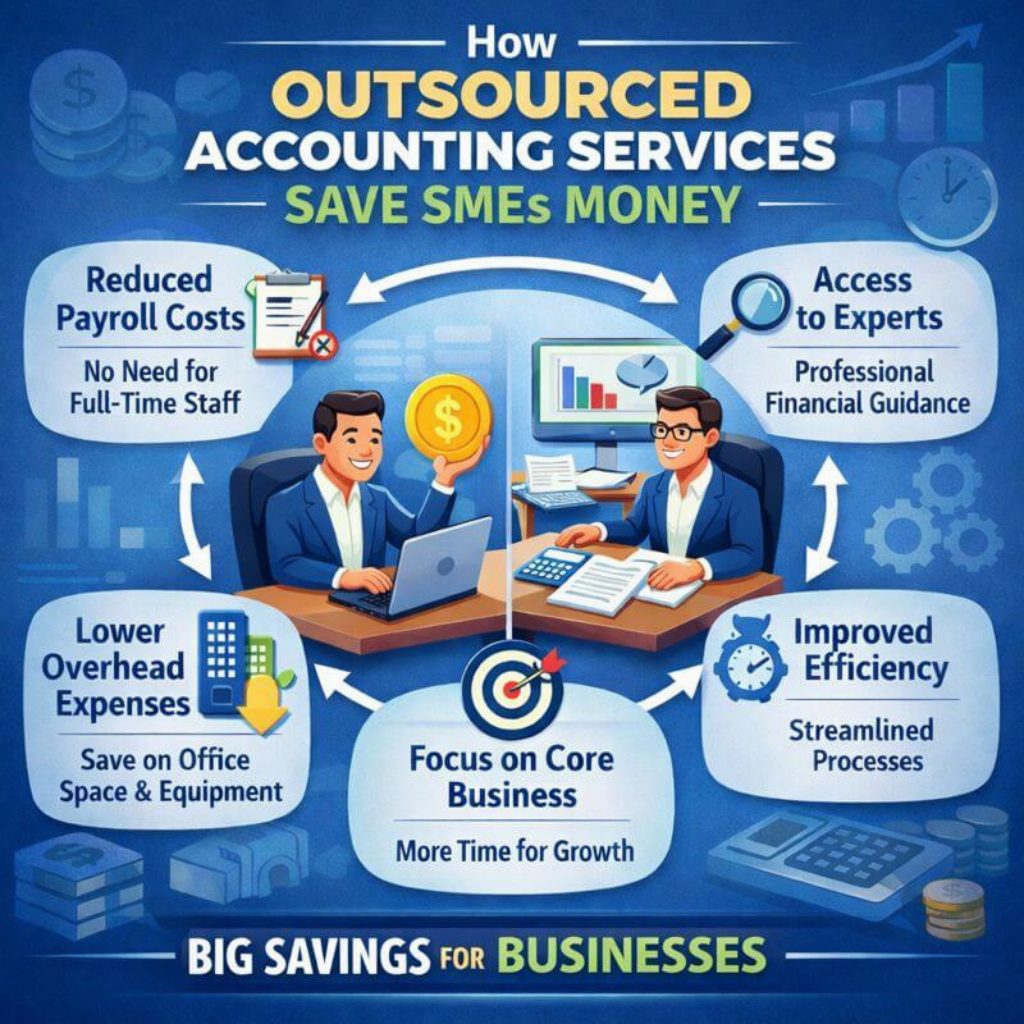
58% of companies cite cost reduction as the top reason for outsourcing finance and accounting services. This approach enables labor and infrastructure cost savings reaching up to 40% compared to traditional in-house staffing models. This cost efficiency makes outsourced CFOs particularly attractive for companies managing tight budgets or uncertain revenue streams.
Outsourced CFOs bring specialized expertise that might be unavailable or too expensive to hire internally. They work with multiple companies across various industries, accumulating valuable knowledge that benefits each client relationship. This diverse experience provides insights and best practices that single-company CFOs rarely develop.
Access to advanced tools and technologies comes standard with most professional outsourced CFO services. These professionals invest in expensive financial software and sophisticated analytical systems that would be costly for individual companies to purchase and maintain independently.
The on-demand nature of outsourced services allows companies to scale financial expertise based on current operational needs. During busy periods or special projects requiring intensive attention, you can increase CFO involvement temporarily without making permanent staffing commitments that continue indefinitely.
Flexibility and Scalability for Growing Businesses
Outsourced CFO services adapt smoothly to changing business requirements without renegotiating complex employment contracts. Companies can increase or decrease service levels based on different growth phases and predictable financial cycles throughout the year.
Seasonal businesses particularly benefit from this inherent flexibility in engagement terms. Retail companies can increase CFO involvement during peak holiday seasons and reduce services during traditionally slower periods. This approach aligns costs directly with revenue cycles effectively, improving overall profitability.
Scaling CFO services up or down happens quickly with established outsourced providers. Adding new services or reducing scope doesn’t require lengthy hiring processes or complicated termination procedures. This agility helps companies respond to unexpected market changes rapidly and efficiently.
Strategic fractional CFO services can grow alongside your business, providing different expertise levels as operational needs evolve. Early-stage companies might start with basic financial reporting and gradually progress to complex strategic planning as they mature and expand.
Risks: Communication Gaps and Reduced Oversight
Communication challenges represent the primary risk of outsourced CFO arrangements that companies must address proactively. Without daily face-to-face interaction, important financial issues might not receive immediate attention when they first emerge. This can lead to delayed responses during critical situations requiring quick decisions.
Integration with internal teams requires more conscious effort when working with outsourced CFOs. They need dedicated time to understand company processes thoroughly and build productive relationships with key stakeholders. This learning curve can impact initial effectiveness until familiarity develops.
Limited availability during urgent situations creates potential problems for companies relying on outsourced CFOs. While most providers offer emergency contact options and rapid response protocols, immediate responses aren’t guaranteed like with in-house staff members always present.
Confidentiality concerns naturally arise when sharing sensitive financial information with external providers. Companies must trust outsourced CFOs with proprietary data and strategic plans that could impact competitive positioning if disclosed inappropriately.
Cost Comparison: In-House CFO vs Outsourced Financial Leadership

Understanding the complete cost structure helps companies make genuinely informed decisions between in-house CFO vs outsourced models. The comparison extends well beyond basic salary figures to include hidden costs and long-term financial impact that accumulates over time.
Salary, Benefits, and Overhead Breakdown
In-house CFO compensation varies significantly based on company size, industry complexity, and geographic location. Hourly rates for experienced part-time CFOs typically range from $250 to $350, with some charging up to $400 for smaller specialized projects requiring niche expertise.
Total compensation for full-time CFOs includes multiple cost components that accumulate quickly. Base salary ranges from $200,000 to $500,000 or more annually depending on experience level. Performance bonuses add another 25-50% of base salary to total compensation. Comprehensive benefits packages cost $30,000 to $60,000 annually including health insurance and retirement contributions. Payroll taxes and insurance add 15-20% of salary to employer costs. Office space and equipment requirements add $15,000 to $25,000 annually in overhead expenses.
These costs create fixed expenses that continue regardless of actual workload or current business performance. During slow periods, companies still pay full compensation even when CFO services aren’t being fully utilized for productive activities.
Outsourced CFO costs operate on variable structures that align directly with business needs. Monthly retainers typically range from $5,000 to $15,000, depending on service scope and engagement complexity. This represents significant savings compared to full-time alternatives when calculating total annual costs.
Hidden Costs and Flexibility of Retainer Models
Recruitment costs add substantial expenses to in-house CFO hiring beyond obvious compensation. Executive search firms typically charge 25-33% of first-year compensation, often totaling $75,000 to $150,000 for senior positions. Internal recruiting efforts also consume valuable HR resources and executive time that has opportunity costs.
Onboarding and training costs continue for several months after hiring any new executive. New CFOs need dedicated time to understand company systems, established processes, and organizational culture thoroughly. This learning period reduces immediate productivity while maintaining full compensation costs throughout the transition.
Severance and termination costs create additional financial risk with in-house CFOs. Poor performance or changing business needs can result in expensive separation agreements and potential legal fees if disputes arise.
Retainer models provide welcome cost predictability and operational flexibility simultaneously. Companies can adjust service levels monthly without incurring termination costs or requiring lengthy contract modifications. This flexibility particularly benefits growing businesses with frequently changing needs and uncertain forecasts.
ROI: Long-Term Value vs Short-Term Savings
Calculating return on investment requires examining both direct costs and intangible value creation carefully. In-house CFOs can provide substantial value through systematic team development, process improvement initiatives, and strategic guidance. These benefits may justify higher costs for companies with complex financial needs requiring constant attention.
Short-term savings from outsourced CFOs can improve cash flow and reduce burdensome fixed costs. Averaged out over a year, outsourced services typically cost between $72,000 and $96,000 annually. This represents significant cost savings compared to full-time CFO salaries and comprehensive benefits packages.
Long-term value creation depends heavily on business objectives and realistic growth plans. Companies planning rapid expansion or complex transactions might benefit more from dedicated in-house leadership capability. Stable businesses with predictable financial needs might find outsourced services more cost-effective overall.
Understanding outsourced finance ROI requires measuring both tangible and intangible benefits carefully. Improved financial reporting accuracy, better cash management, and strategic guidance all contribute to overall return on investment regardless of which CFO model you ultimately choose.
Which CFO Model Is Right for Your Business?
Choosing between in-house CFO vs outsourced models depends on multiple factors including company size, growth stage, and financial complexity. The right choice aligns with your business objectives and available resource capacity.
Startups and SMEs: Leaning Toward Outsourcing
Most startups and small-to-medium enterprises benefit substantially from outsourced CFO services initially. Limited budgets and rapidly changing needs make full-time CFO hiring impractical for companies under $50 million in annual revenue.
Early-stage companies require specialized expertise for fundraising, financial modeling, and compliance requirements. Outsourced CFOs bring this expertise without the long-term commitment and high costs of full-time hires that strain limited resources.
Cash flow management becomes absolutely critical for growing businesses with tight margins. Outsourced CFO services provide professional oversight without consuming large portions of available capital. This preserves resources for core business operations and growth initiatives that drive revenue.
The flexibility to scale services matches startup growth patterns naturally. Companies can increase CFO involvement during intensive fundraising periods and reduce services during stable operational phases. This cost optimization helps startups manage resources effectively through unpredictable growth cycles.
Mid-Sized Companies: When a Hybrid CFO Model Works
Companies with $50-200 million in revenue often benefit from hybrid CFO models that combine strengths. These arrangements strategically combine in-house financial management with outsourced strategic expertise and specialized services.
Hybrid models might include in-house controllers or finance managers handling daily operations effectively. At the same time, outsourced CFOs focus on strategic planning, advanced analysis, and special projects requiring specific expertise. This combination provides cost efficiency with adequate oversight for complex operations.
Complex transactions like acquisitions or major expansions can trigger temporary outsourced CFO engagement. Companies can access specialized expertise for specific projects without permanent staffing increases that continue after project completion.
The hybrid approach allows companies to test outsourced CFO relationships before making long-term commitments. Successful partnerships can expand over time while unsuccessful ones can end without termination complications or legal disputes.
Large Enterprises: The Case for Full-Time CFOs
Large enterprises typically require full-time CFO leadership due to operational complexity, compliance requirements, and stakeholder expectations. Companies over $200 million in revenue usually justify the substantial investment in dedicated financial leadership.
Public companies face regulatory requirements that demand continuous oversight and immediate availability. SEC reporting, investor relations, and compliance monitoring require full-time attention that outsourced CFOs cannot provide effectively given their multiple client commitments.
Complex organizational structures with multiple subsidiaries, international operations, or diverse business units require dedicated coordination. In-house CFOs can manage these complexities more effectively than part-time alternatives dividing attention across clients.
Board and investor expectations often require full-time CFO presence at meetings and strategic sessions. The level of engagement expected at the enterprise level typically exceeds what outsourced CFOs can provide while maintaining other client relationships.
When to Hire an Outsourced CFO vs In-House

Specific business situations indicate when one CFO model provides clear advantages over the other. Understanding these scenarios helps companies make appropriate timing decisions for their financial leadership needs.
Signs Your Business Needs Strategic Financial Guidance
Several indicators suggest your business requires professional CFO-level expertise now. Monthly revenue exceeding $1 million typically generates sufficient complexity to justify CFO services. Rapid growth phases also create financial management challenges that require professional oversight immediately.
Fundraising activities demand specialized CFO expertise that most business owners lack. Investor presentations, due diligence processes, and financial modeling require skills that few business owners possess internally. Outsourced CFOs can provide this expertise for specific fundraising projects without permanent commitments.
Complex transactions like acquisitions, mergers, or major partnerships require expert financial guidance. These situations often arise unexpectedly and need immediate professional attention to protect company interests. Outsourced CFOs can provide specialized expertise for transaction-specific needs quickly.
Cash flow challenges or profitability problems signal the need for expert financial analysis. Professional CFOs can identify underlying issues and develop practical solutions that inexperienced financial managers might miss entirely.
Financial Complexity and Regulatory Requirements
Growing regulatory complexity often triggers the need for professional CFO services. Companies expanding internationally face new compliance requirements that require specialized knowledge of local regulations. Outsourced CFOs can provide this expertise without permanent staffing increases that become unnecessary after expansion completes.
Industry-specific regulations create additional complexity for many businesses across sectors. Healthcare, financial services, and technology companies face unique compliance challenges that require professional oversight. Specialized outsourced CFOs bring industry-specific knowledge to these complex situations.
Multiple revenue streams and complex pricing models require sophisticated financial analysis and reporting. SaaS companies, e-commerce businesses, and service providers with recurring revenue need CFO-level expertise to manage financial complexity effectively.
For companies navigating regional expansion, CFO expansion Middle East strategies require understanding local markets. Tax optimization and planning become more critical as businesses grow across borders. Professional CFOs can identify strategies and structures that reduce tax burden and improve profitability significantly.
Growth Stage and Long-Term Planning Needs
Rapid growth phases create financial management challenges that overwhelm basic bookkeeping and accounting functions. Companies experiencing 50% or higher annual growth typically need CFO-level oversight to manage cash flow and operational scaling effectively.
Long-term strategic planning requires financial modeling and scenario analysis that exceeds basic accounting capabilities. Professional CFOs can create sophisticated models that guide strategic decision-making and resource allocation across the organization.
Exit planning for business sales or transitions requires specialized financial expertise. CFOs can prepare businesses for sale, manage due diligence processes, and optimize transaction structures. This expertise often increases sale values significantly through proper preparation.
Succession planning within family businesses requires careful financial structuring and planning. Professional CFOs can guide these complex transitions while maintaining business continuity and preserving family relationships.
Key Factors to Consider Before Choosing a CFO Model
Multiple factors influence the optimal CFO model choice for each business. Careful evaluation of these considerations helps ensure the selected model aligns with company needs and objectives.
Budget and Financial Priorities
Available budget often determines CFO model feasibility regardless of preferences. Companies with limited cash flow might find in-house CFO costs prohibitive regardless of potential benefits. Honest budget assessment prevents overcommitting to unsustainable financial arrangements that strain resources.
Financial priorities and growth objectives should align with CFO model selection. Companies prioritizing rapid growth might benefit from in-house leadership that can scale teams and processes. Businesses focused on profitability might prefer cost-efficient outsourced services that minimize overhead.
Cash flow patterns affect CFO model suitability in practical terms. Seasonal businesses with irregular revenue might prefer flexible outsourced arrangements that scale with demand. Companies with stable, predictable revenue can better afford fixed in-house costs throughout the year.
Investment requirements for finance systems and processes vary between CFO models. In-house CFOs might require substantial technology investments and team building over time. Outsourced CFOs typically provide their own systems and expertise as part of service delivery.
Business Size and Industry Specifics
Company size creates natural thresholds for CFO model selection based on complexity. Businesses under $10 million in revenue rarely justify full-time CFOs economically. Companies over $100 million usually require dedicated financial leadership given operational complexity.
Industry-specific requirements influence CFO model choice significantly across sectors. Heavily regulated industries might require continuous compliance oversight that favors in-house arrangements. Technology companies with complex revenue recognition might need specialized outsourced expertise.
Geographic considerations affect CFO availability and cost structures regionally. Remote locations might have limited in-house CFO candidates but good access to outsourced services. Major metropolitan areas offer more options for both models at competitive rates.
Need for Strategic vs Operational Finance
Strategic financial needs favor different CFO models than operational requirements. Companies requiring complex financial modeling and strategic planning might benefit from outsourced CFO expertise. Businesses needing daily operational oversight typically require in-house leadership presence.
The balance between strategic and operational needs determines optimal CFO engagement levels. Heavy operational requirements suggest in-house arrangements work best long-term. Strategic project-based needs align better with outsourced services that provide specific expertise.
Team development priorities influence CFO model selection for the future. Companies wanting to build internal finance capabilities benefit from in-house CFO leadership. Organizations preferring to focus on core business activities might choose outsourced arrangements.
Future growth plans should influence current CFO model selection strategically. Companies planning rapid expansion might start with outsourced services and transition to in-house leadership as they grow. This staged approach optimizes costs while building capabilities systematically.
Selecting Between In-House CFO vs Outsourced for Your Growth
The decision between in-house CFO vs outsourced financial leadership shapes your company’s financial future significantly. 90% of CFOs now outsource at least some accounting functions, showing the growing acceptance of flexible financial leadership models across industries.
Consider your current business stage carefully, budget constraints realistically, and growth objectives honestly. Startups and SMEs often benefit from outsourced CFO flexibility and specialized expertise initially. Larger enterprises typically require dedicated in-house leadership for complex operations and compliance requirements.
The choice isn’t permanent and can evolve with your business. Many successful companies start with outsourced CFO services and transition to in-house leadership as they grow. Others find hybrid models that combine the best aspects of both approaches effectively.
Real-world examples demonstrate how companies optimize financial leadership decisions. Learn from an outsourced accounting case study showing measurable improvements in efficiency and cost savings. These practical examples illustrate how the right financial leadership choice drives business success.
Ready to find the right CFO solution for your business needs? Prima Consulting provides expert guidance on financial leadership decisions and offers comprehensive strategic fractional CFO services tailored to your specific needs and growth objectives.