TL;DR
Outsourced actuarial services deliver 30-40% cost savings and flexible scalability compared to building in-house teams, but you sacrifice direct control and business integration. This comparison guide evaluates actuarial outsourcing benefits like IFRS17 actuarial support access and faster project delivery against in-house actuary costs including recruitment, technology, and training expenses. You’ll see when each model works best based on budget constraints, project complexity, and strategic goals. Learn how hybrid approaches combine internal core capabilities with actuarial BPO for specialized work, and evaluate which option aligns with your insurance reporting needs and long-term growth strategy.
The actuarial landscape shifts rapidly across insurance markets worldwide. Companies face a decision that impacts their bottom line and strategic positioning.
Should you build an in-house team or partner with outsourced actuarial services? This isn’t just about cost. It’s about accessing expertise when market conditions change overnight and regulatory requirements shift.
The stakes remain high. Choose poorly, and you’ll face compliance issues and inflated costs. Choose wisely, and you’ll position your organization for growth while maintaining competitive advantage.
This comparison guide examines both models to help you make an informed decision that aligns with your business objectives and maximizes your actuarial investment.
Why Businesses Turn to Outsourced Actuarial Services
Outsourced actuarial services transform how insurance companies approach risk assessment and compliance. Organizations increasingly turn to external partners for specialized work, particularly in complex areas like IFRS17 implementation.
According to PwC’s 2023 Global Actuarial Modernisation Survey, 78% of insurers are investing in actuarial function transformation to meet evolving regulatory demands. What’s interesting is that this transformation increasingly involves external partnerships to access specialized capabilities.
Unmatched Flexibility and Scalability
Outsourcing provides flexibility in resource allocation that internal teams can’t match. Your actuarial capacity expands or contracts based on project requirements without permanent staff overhead.
Peak seasons won’t strain internal resources. External providers quickly scale teams up for major implementations or down during quieter periods. That said, you maintain control over project outcomes without carrying fixed headcount costs.
Geographic flexibility adds another dimension. You tap into global talent pools, accessing specialized skills that might be scarce locally. Staff augmentation becomes seamless when you need specific actuarial expertise for short-term projects.
Compelling Cost Efficiency Benefits
The financial benefits of actuarial outsourcing are substantial. Companies reduce operational costs by 30-40% compared to maintaining equivalent in-house capabilities. Here’s the thing—cost of actuary recruitment, training, and retention creates significant pressure on smaller organizations.
Senior actuaries command high salaries, and recruitment takes months. Infrastructure costs disappear with outsourcing. No specialized software licenses, hardware, or office space for additional staff.
According to Deloitte’s Global Shared Services Survey, companies prioritize outsourcing for multiple strategic reasons beyond cost reduction. Organizations seek improved service quality, access to specialized talent, and enhanced operational efficiency through external partnerships.
Access to Deep Actuarial Expertise
External providers bring specialized actuarial expertise across industries and regulatory frameworks. Teams gain access to professionals who’ve solved similar challenges across different markets. On another note, this cross-pollination of knowledge accelerates problem-solving.
IFRS17 actuarial support represents a prime example. Implementation requires knowledge that many companies lack internally. External providers have navigated these waters for multiple clients, which means you avoid costly trial-and-error learning.
Technology expertise comes with outsourcing arrangements. Providers invest in cutting-edge software and analytical tools that would be cost-prohibitive individually. PwC’s survey findings show that 65% of insurers plan to increase investment in actuarial technology and automation over the next three years.
Cross-industry experience helps identify best practices and innovative solutions internal teams might miss.
Faster Project Turnaround Times
Dedicated external teams focus exclusively on your projects without day-to-day operational distractions. This approach typically results in faster delivery. Established processes streamline execution because actuarial BPO providers refine workflows through multiple client engagements.
Resource allocation becomes predictable. External teams assemble quickly with the right skill mix for specific projects. Quality assurance processes are typically more robust in specialized firms, reducing time spent on revisions.
Enhanced Focus on Core Business Activities
Outsourcing non-core functions frees internal teams to focus on strategic initiatives and core activities that drive revenue. Management attention shifts from operational concerns to strategic planning and business development.
Internal resources concentrate on activities that directly impact customer relationships and growth. Insurance reporting requirements get handled by specialists while your team focuses on product development and market expansion. That’s why many companies find this model particularly attractive.
McKinsey’s research on insurance productivity suggests that insurers who reimagine their operating models could achieve 20-40% productivity improvements by 2030. Strategic outsourcing plays a key role in this transformation.
For companies considering internal audit outsourcing services alongside actuarial functions, the hybrid approach offers even more strategic flexibility and risk management benefits.
Potential Challenges with Outsourced Actuarial Services
Reduced Direct Control
External partnerships mean less direct control over processes and outcomes. Decision-making becomes more complex with multiple parties involved. Quality control becomes challenging when work happens off-site.
Monitoring performance requires additional management attention. Timeline dependencies on external providers can create bottlenecks without proper management. You might be wondering how to maintain standards when teams work remotely.
Communication and Cultural Barriers
Geographic distances create communication challenges. Time zone differences may slow response times and collaboration. Language barriers can lead to misunderstandings and misaligned expectations, even with English as the common language.
Technical concepts may require additional explanation when communicated across organizational boundaries. Regular communication protocols become essential but add project management overhead. On the flip side, these challenges become manageable with proper planning.
Security and Data Protection Risks
Sharing sensitive actuarial data introduces security risks. Data breaches could have serious consequences for your business. Intellectual property concerns arise when proprietary models get shared with external providers.
Regulatory compliance becomes complex when data crosses international boundaries, particularly with evolving privacy regulations. Still, reputable providers implement robust security measures to protect client information.
The Case for In-House Actuarial Teams
Building internal capabilities provides complete control over risk assessment and compliance functions. Many established insurance companies maintain robust in-house teams as their primary actuarial resource.
Complete Control and Oversight
Direct management allows immediate course corrections and real-time quality control over all actuarial functions. Internal teams redirect quickly based on changing priorities or regulatory requirements without external coordination.
Performance monitoring becomes straightforward with direct supervision and face-to-face interactions. Quality standards maintain consistency through established internal processes and procedures. You see results immediately when adjustments are needed.
Deep Business Understanding
In-house actuaries develop intimate knowledge of your operations, culture, and strategic objectives over time. Product-specific expertise builds as team members work exclusively with your insurance products or financial services.
Customer behavior insights come from sustained exposure to your client base and market segment. Historical context accumulates, providing valuable perspective on long-term trends and patterns. This institutional knowledge becomes a competitive advantage.
Similar to the decision between an in-house CFO vs outsourced financial leadership, the actuarial model choice impacts strategic direction and operational efficiency.

Stronger Team Integration
Internal teams develop stronger working relationships and more effective collaboration patterns with other departments. Shared company culture and values align team members toward common objectives naturally.
Communication flows smoothly within established organizational structures and reporting lines. Cross-functional coordination improves when actuarial staff work alongside other departments regularly. As a result, projects move forward with fewer coordination hurdles.
Long-Term Knowledge Building
Investment in internal talent creates lasting competitive advantages through accumulated expertise and institutional knowledge. Specialized knowledge about your market segment becomes a strategic asset that competitors can’t easily replicate.
Process improvements and innovations develop organically within your organization’s specific context. Succession planning maintains continuity of expertise and knowledge transfer over time. Because of that, you build sustainable competitive advantages.
Challenges of Building In-House Teams
Significantly Higher Costs
In-house actuary costs include salaries, benefits, training, technology, and infrastructure expenses that add up quickly. Recruitment costs can be substantial for senior positions.
The Bureau of Labor Statistics reports that actuaries earn a median annual wage of $120,000, with the top 10% earning more than $206,000. Employment in this field is projected to grow 23% from 2022 to 2032, much faster than the average for all occupations.
This rapid growth drives up compensation expectations as companies compete for limited talent. Technology investments in specialized software and hardware require significant capital commitment upfront. Ongoing training and professional development represent continuous cost obligations that increase over time.
To put it simply, the total cost of ownership for internal teams often exceeds initial projections.
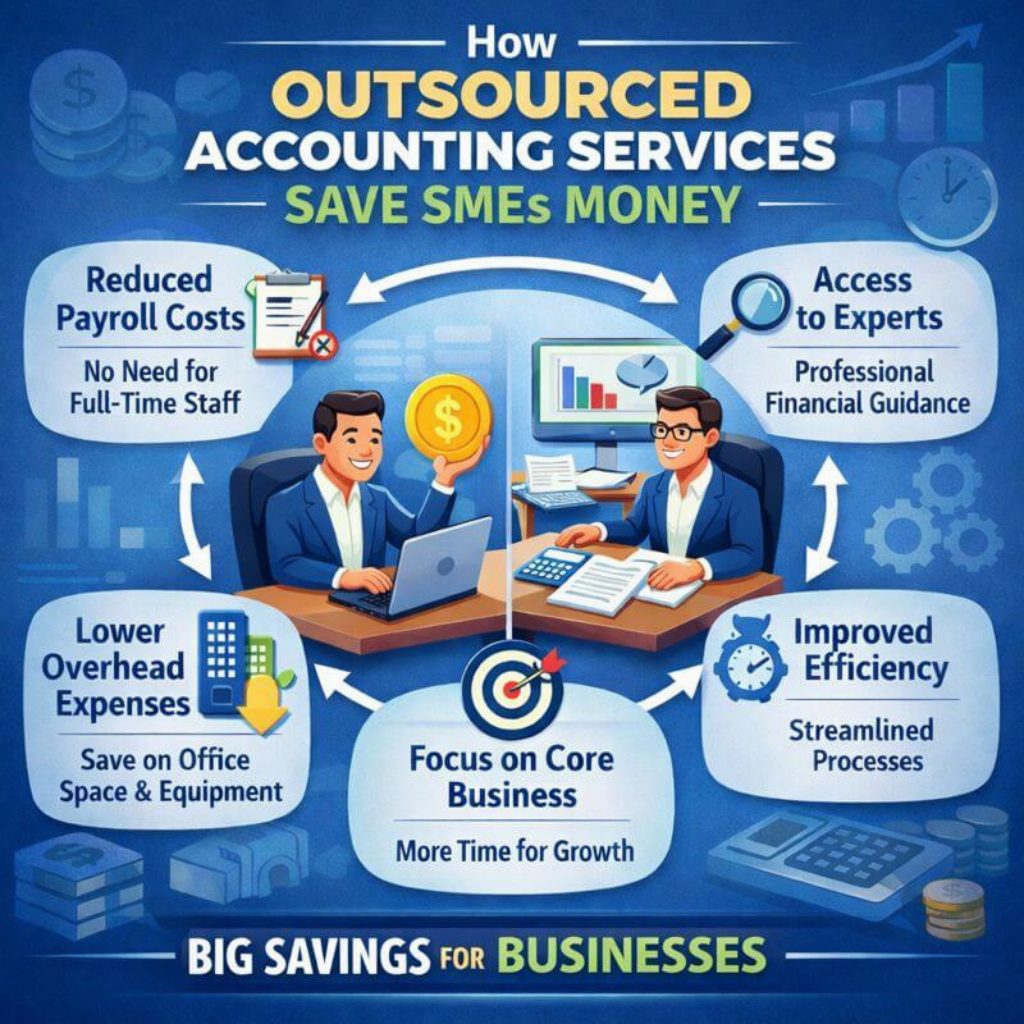
Companies evaluating overall financial efficiency should also consider how outsourced accounting can save money for SMEs when making these broader operational decisions.
Limited Local Talent Availability
Local talent pools constrain hiring options, particularly in specialized actuarial science areas and emerging technologies. Compensation competition with other firms drives up salary costs significantly in competitive markets.
Skill gaps in areas like data analytics or specific regulatory frameworks prove difficult to fill internally. Geographic limitations restrict access to the best available talent in your region. Then again, remote work has expanded the available talent pool somewhat.
Reduced Operational Flexibility
Fixed headcount makes adjusting capacity based on fluctuating workloads challenging and costly. Project-based resource allocation becomes difficult when staff have ongoing operational responsibilities that can’t be paused.
Specialized expertise for one-time projects may not justify permanent hiring and long-term salary commitments. Seasonal variations lead to underutilized resources during slower periods, reducing overall efficiency. So naturally, this creates pressure to justify headcount investments.
How to Choose the Right Actuarial Model
The decision between outsourced actuarial services and in-house teams requires careful analysis of your situation and strategic objectives. Let’s break it down into key evaluation areas.
Evaluate Your Budget Constraints
Budget often determines feasibility. Calculate total cost of ownership for both options, including hidden costs like management overhead. Pros and cons of actuarial outsourcing from a financial perspective vary based on your scale and scope of needs.
Cash flow considerations matter when comparing upfront investment versus ongoing outsourcing fees. ROI calculations should include direct costs and indirect benefits like improved focus on core activities. At the same time, you need to factor in opportunity costs of capital tied up in internal infrastructure.
Understanding outsourced finance ROI principles can help you apply similar frameworks to actuarial function decisions.
Assess Your Project Requirements
Project complexity and duration influence the optimal approach significantly. Short-term, specialized projects often favor outsourcing. When to outsource actuarial work depends on factors like scope, required expertise, and timeline constraints.
Regulatory compliance requirements may favor internal teams for sensitive or highly regulated work. Technology requirements should be evaluated based on internal capabilities and provider offerings. More importantly, you should consider whether projects require deep business context or can be executed with general industry knowledge.
Understanding factors like those in actuarial valuation of employee benefits helps clarify the technical complexity involved in different actuarial projects.
Consider Team Culture Fit
Organizational culture plays a significant role in determining which model will be most effective long-term. Communication preferences and working styles should align with your chosen approach for optimal results.
Collaboration requirements between actuarial functions and other departments may favor internal teams. Management philosophy regarding control and oversight influences the decision significantly. What really matters is whether your organization thrives with tight integration or values specialized external expertise.
Align with Strategic Goals
Strategic objectives should drive your decision between internal and external actuarial resources. Growth plans and expansion strategies may require different approaches to actuarial support and scalability.
Competitive positioning considerations include whether actuarial expertise provides strategic advantage in your market. Market conditions and regulatory changes should factor into long-term planning decisions. In turn, your actuarial model should support rather than constrain your strategic vision.
Smart Companies Use Hybrid Approaches
Many successful organizations adopt hybrid models combining internal and external actuarial resources strategically. Core competencies stay internal while specialized or overflow work gets outsourced to expert providers.
McKinsey’s insurance productivity research indicates that leading insurers are redesigning their operating models to combine internal capabilities with strategic partnerships. This hybrid approach enables organizations to maintain core competencies while accessing specialized expertise as needed.
Outsourced actuary companies supplement internal capabilities during peak periods. Risk diversification benefits from not relying entirely on either internal or external resources alone. Actuarial outsourcing benefits can be captured selectively through strategic partnerships that complement internal strengths.
Companies that have seen success with models like this outsourced accounting case study often apply similar hybrid thinking to actuarial functions.
Finding the Right Outsourced Actuarial Services for Your Business
Your actuarial model choice impacts your organization for years. The right decision depends on your circumstances, but this choice isn’t permanent. Many successful companies start with one approach and change their model as they grow.
The Bureau of Labor Statistics projects that actuarial demand will continue growing at 23% through 2032, creating ongoing pressure on hiring and compensation. This market reality makes strategic sourcing decisions increasingly important for organizational competitiveness.
Whether you choose outsourced actuarial services, build an in-house team, or adopt a hybrid approach, align your actuarial resources with strategic objectives and operational realities. Consider how this decision integrates with broader questions about operations.
For instance, evaluating is outsourced finance worth it for your SME’s ROI goals provides valuable context for actuarial outsourcing decisions. Smart businesses take a holistic view of which functions to keep internal versus external.
Ready to find the actuarial solution that fits your business perfectly? Prima Consulting offers expert guidance and comprehensive outsourced actuarial services. Our team helps you assess options and implement the right approach for your organization’s unique needs and strategic objectives.