TL;DR
Need to understand IFRS 13 valuation services? This guide walks you through how to pick a trusted valuation partner and implement fair value measurement correctly. Learn key valuation frameworks, level-1 to level-3 fair value measurements, and how regional market factors affect your outcomes. You’ll discover how to evaluate valuation consulting firms based on credentials, market insight, and independence. Plus, get practical guidance on choosing between valuation reporting services and expert fair value consultants. Read on to decide confidently and secure the right expert for your business needs.
Financial markets move fast. Companies worldwide face pressure to meet global accounting standards while managing local regulatory demands. IFRS 13 valuation services aren’t just compliance checkboxes. They’re your safeguard against financial restatements and your ticket to international investor confidence.
You need more than generic accounting advice. You need specialists who understand both the technical side of fair value measurement and the unique market dynamics of your region. The right valuation partner makes the difference between smooth audits and costly corrections.
What Is IFRS 13 and Why Does Your Business Need It?
IFRS 13 establishes a single framework for measuring fair value across financial statements. It defines fair value as the price you’d receive to sell an asset or the amount you’d pay to transfer a liability in an orderly transaction between market participants.
The standard applies when other IFRS standards require or permit fair value measurements. Think investment properties, financial instruments, business combinations, and impairment testing. Your company can’t ignore this—regulatory bodies worldwide mandate compliance for listed entities and financial institutions.
Banks, insurance companies, and real estate firms face particularly strict requirements. Your valuation methodology directly impacts your balance sheet, income statement, and investor confidence. Global IPO proceeds reached record levels in 2024, with investors scrutinizing financial statements before committing capital.
Understanding IFRS 13 fair valuation frameworks helps you meet investor expectations and maintain regulatory compliance.
How to Apply IFRS 13 in Asset and Liability Valuations
Applying IFRS 13 valuation services starts with identifying what you’re measuring. You must consider the asset or liability’s characteristics that market participants would consider when pricing it.
You need to determine the principal market where you’d normally transact. If no principal market exists, you use the most advantageous market. This isn’t about where you’d prefer to transact but where you actually would.
The measurement considers the highest and best use of assets from a market participant’s perspective, not your specific use. This distinction matters when valuing real estate or specialized equipment.
Three valuation approaches exist under IFRS 13:
- Market approach: Uses prices from market transactions involving identical or comparable assets
- Income approach: Converts future amounts to present value using discounting techniques
- Cost approach: Reflects the amount required to replace an asset’s service capacity
You aren’t required to use multiple approaches, but you must select the most appropriate techniques given your circumstances. Documentation is critical for audit defense and regulatory compliance.
Key Factors Affecting Fair Value Under IFRS 13
Regional economic conditions significantly influence fair value measurements. Global GDP growth trends affect discount rates and market participant assumptions. These growth patterns change how you calculate present values and risk adjustments.
Currency fluctuations create additional complexity. Exchange rate volatility impacts cross-border valuations and must be reflected in your measurements through proper IFRS 13 valuation services.
Regulatory environments differ across jurisdictions. Capital market authority requirements vary by region. Your valuation approach must account for these jurisdiction-specific factors.
Islamic finance considerations add another layer to valuations. Sharia-compliant structures require specialized valuation expertise. Market liquidity varies dramatically across asset classes and geographies. What’s considered an active market in major financial centers might not exist in smaller markets.
Understanding the IFRS 13 Fair Value Hierarchy
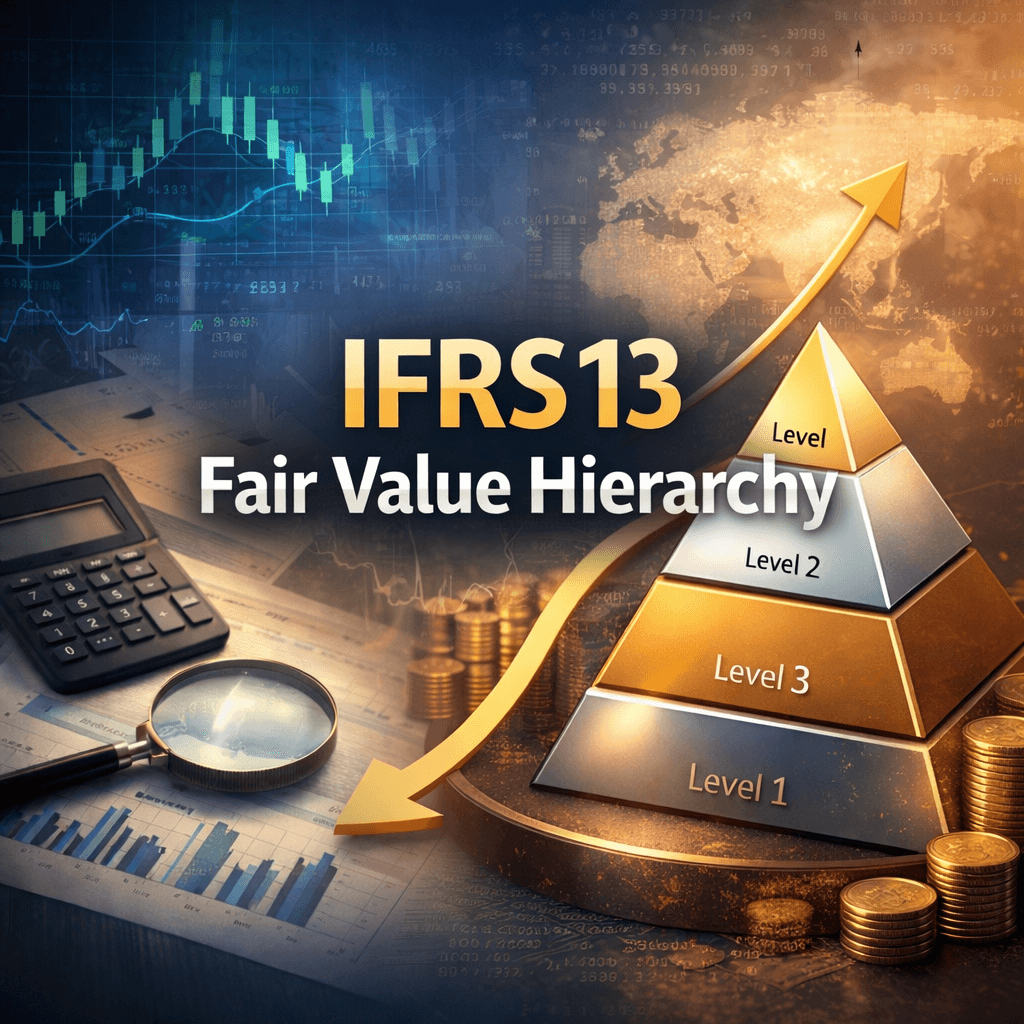
The fair value hierarchy prioritizes inputs into three levels based on observability and reliability.
Level 1 inputs are quoted prices in active markets for identical assets or liabilities. These provide the most reliable evidence. Stock prices on major exchanges typically qualify as Level 1.
Level 1 inputs are rare for many assets. Real estate, private equity stakes, and specialized equipment rarely have identical comparables in active markets.
Level 2 inputs are observable inputs other than Level 1 prices. These include quoted prices for similar assets, interest rates observable at commonly quoted intervals, and credit spreads.
Many financial instruments fall into Level 2. Corporate bonds, certain derivatives, and investment properties with comparable market data typically receive Level 2 classification under IFRS 13 valuation services.
Level 3 inputs are unobservable inputs used when observable inputs aren’t available. You develop these using the best information available, adjusted for market participant assumptions.
Most real estate valuations use Level 3 inputs. Properties often lack the transaction volume needed for observable comparables.
Your disclosure requirements increase as you move from Level 1 to Level 3. Level 3 measurements require sensitivity analysis, valuation technique descriptions, and quantitative information about unobservable inputs.
Misclassification between levels carries serious consequences. Regulators scrutinize level determinations during reviews and audits.
Differences Between IFRS 13 and Other Valuation Standards
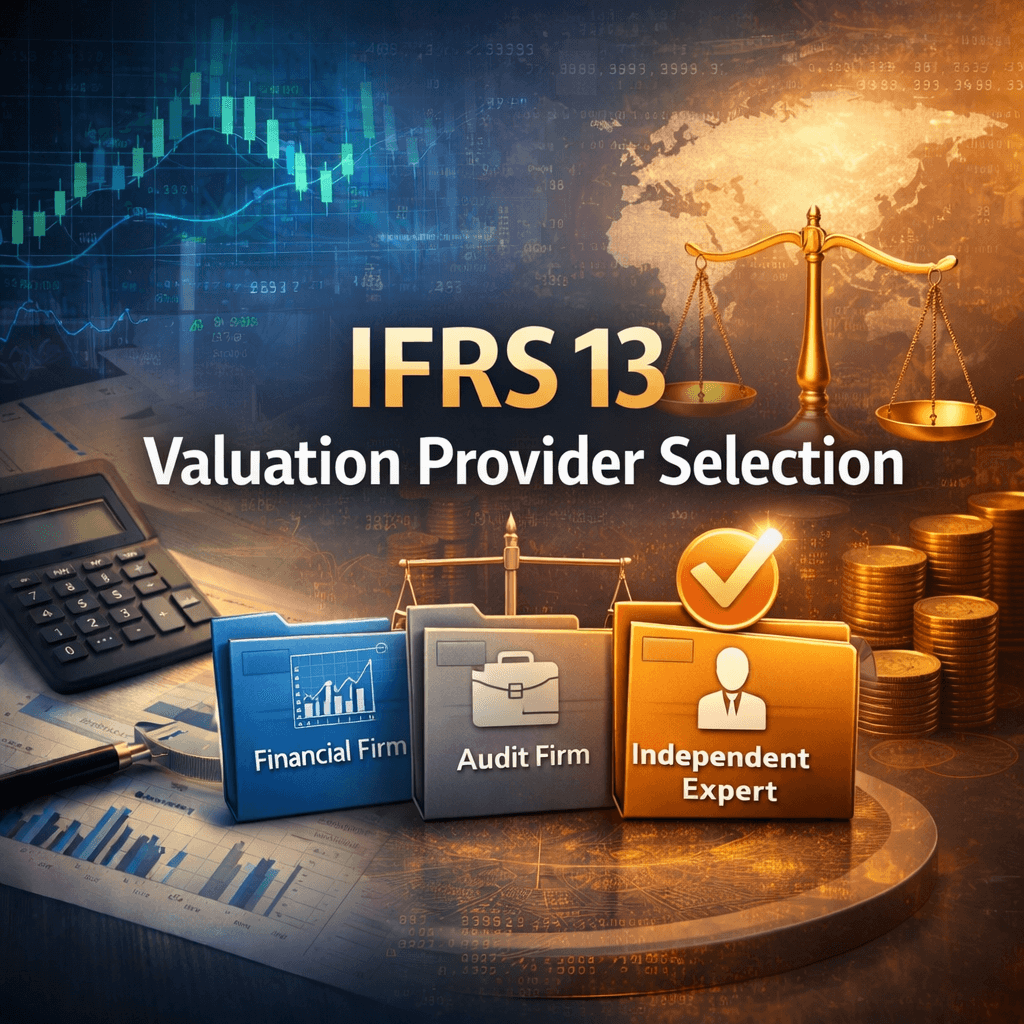
Image Caption:
Selecting the right provider for IFRS 13 valuation services ensures credibility, independence, and audit-ready valuation outcomes.
IFRS 13 valuation services and US GAAP’s ASC 820 share similar concepts but differ in application details.
Both standards establish fair value hierarchies and emphasize market participant assumptions. The core definition of fair value aligns between the two frameworks.
Key differences appear in specific applications. ASC 820 provides more prescriptive guidance on certain financial instruments. IFRS 13 offers more principles-based direction.
The unit of account may differ. ASC 820 includes specific guidance on portfolio-level measurements that IFRS 13 addresses less explicitly.
Disclosure requirements vary slightly between the standards. For companies with global operations or international investors, understanding these differences matters. Your valuation methodology must satisfy both frameworks if you’re dual-listed or seeking American investment.
Most companies primarily deal with IFRS 13 valuation services. As markets integrate globally, awareness of international standards becomes strategically important.
Best Practices for Implementing IFRS 13 Valuation Techniques
Start with a robust valuation policy. Document your approach to selecting IFRS 13 valuation techniques, determining market participant assumptions, and classifying measurements within the hierarchy.
Build internal expertise or partner with specialists. IFRS 13 requires judgment calls that benefit from deep technical knowledge and market experience.
Implement strong controls around data inputs. Verify market data sources and document how you obtain and validate inputs. Your audit will be smoother with clear documentation.
Establish clear governance over significant judgments. A valuation committee should review and approve major assumptions, especially for Level 3 measurements.
Train your finance team on IFRS 13 valuation services requirements. Understanding fair value principles helps them identify when valuations need updating and what documentation auditors will require.
Maintain detailed workpapers. Document every assumption, every data source, and every calculation. Regulatory reviews will be less painful with organized records.
Consider technology solutions. Valuation software can improve consistency, automate routine calculations, and strengthen audit trails.
Review valuations regularly. Market conditions change. What was reasonable last quarter might need adjustment now.
Expert Asset Valuation Services for Your Business
Accurate asset valuation drives strategic decisions. You can’t make informed choices about selling, acquiring, or investing in assets without knowing their true value.
Financial reporting requirements demand it. IFRS mandates fair value measurement for numerous asset categories. Your annual financial statements won’t pass audit scrutiny without proper IFRS 13 valuation services.
Investors expect transparency. Global IPO activity reached significant levels in 2024, with investors demanding reliable asset valuations before committing capital.
Lenders require valuations for collateral assessment. Banks need independent valuations to determine loan-to-value ratios for all financing arrangements.
Tax compliance increasingly depends on fair value. Transfer pricing rules, various tax calculations, and corporate taxes all reference asset valuations at different points.
Business combinations require purchase price allocation. When you acquire another company, you must allocate the purchase price to identifiable assets and liabilities at fair value.
Choosing the Right Valuation Approach for Your Assets
Financial assets typically use market approaches when possible. Listed securities, bonds traded in active markets, and derivatives with observable prices suit market-based methods.
Income approaches work well for cash-generating assets. Rental properties, operating businesses, and royalty-bearing intangibles lend themselves to discounted cash flow analysis.
Cost approaches apply when replacement cost provides relevant information. Specialized equipment, infrastructure assets, and certain intangibles may warrant cost-based valuation.
Your choice depends on data availability and asset characteristics. A commercial office property with comparable transactions might use a market approach. A unique industrial facility might require an income approach with IFRS 13 valuation services.
Consider using multiple approaches for validation. If two different methods yield widely different results, investigate why before finalizing your valuation.
Industry-specific factors matter. Oil and gas reserves follow different valuation principles than commercial real estate or financial instruments.
Professional judgment remains critical. IFRS 13 doesn’t prescribe specific techniques but requires you to maximize observable inputs and apply methods consistently with the standard’s objective.
Common Challenges in IFRS 13 Asset Valuations
Limited market data creates challenges for many valuations. Transaction volumes in some markets don’t support reliable comparable analysis for IFRS 13 valuation services.
Economic volatility creates uncertainty. Market fluctuations and geopolitical tensions complicate long-term projections needed for income approaches.
Rapid development changes market dynamics. What’s true about a neighborhood today might shift dramatically in two years as new infrastructure appears.
Related party transactions dominate certain markets. When most transactions involve related parties, determining arm’s length fair values becomes challenging.
Regulatory changes happen quickly. New laws, tax regimes, and ownership restrictions can suddenly impact asset values in ways historical data doesn’t capture.
Cross-border complications arise frequently. Valuing assets held through international structures or denominated in foreign currencies adds layers of complexity.
How to Select a Reliable Valuation Service Provider
Credentials matter for IFRS 13 valuation services. Look for qualified appraisers with recognized designations and IFRS 13 expertise. Check their regulatory standing and professional memberships.
Industry experience is crucial. A firm that values tech startups may lack expertise for manufacturing facilities. Match the provider’s background to your asset types.
Local market knowledge separates good from great. Providers who understand global market dynamics, regulatory requirements, and regional business practices add more value than generic international firms.
Independence confirms credibility. Your auditor will scrutinize valuations more carefully if the provider has conflicts of interest with your company.
Technology capabilities indicate sophistication. Modern valuation firms use specialized software, maintain proprietary databases, and apply advanced modeling techniques.
Reference checks reveal reputation. Talk to other clients about responsiveness, quality, and ability to defend valuations during audits.
Pricing should reflect complexity, not just asset values. Be cautious of providers offering cookie-cutter pricing without understanding your specific situation.
Communication skills matter. You need a provider who can explain complex concepts to your board, auditor, and regulator in clear terms.
Purchase Price Allocation and Its Relevance
Purchase price allocation distributes acquisition costs to identifiable assets and liabilities. IFRS 3 Business Combinations requires this process, which relies heavily on IFRS 13 valuation services and fair value principles.
Every business combination triggers PPA requirements. Deal activity creates constant PPA demands for accurate financial reporting.
Proper PPA impacts your balance sheet significantly. It determines goodwill, affects depreciation and amortization, and influences future impairment testing.
Tax implications flow from PPA. Different asset categories receive different tax treatments. Your PPA can affect deductible expenses for years after the acquisition.
Investor relations depend on credible PPA. Analysts and shareholders scrutinize your acquisition accounting. They want to understand what you paid for and whether you overpaid.
Integration planning benefits from PPA insights. Understanding acquired asset values helps prioritize integration efforts and set realistic synergy targets with professional IFRS advisory services.
Steps for Accurate Purchase Price Allocation
Begin with detailed due diligence. Identify all assets and liabilities, including intangibles that may not appear on the target’s balance sheet.
Connect with valuation specialists early. Early involvement improves data gathering and decision-making for IFRS 13 valuation services.
Categorize assets by nature and measurability. Tangible assets, identifiable intangibles, and goodwill each receive different valuation treatments.
Apply appropriate valuation techniques to each asset category. Real estate might use market comparables, customer relationships might use income approaches, and technology might use cost approaches.
Consider market participant assumptions, not acquirer-specific synergies. IFRS 13 requires you to value assets based on what a typical buyer would pay, not your unique strategic value.
Document everything thoroughly. Your auditor will review PPA extensively. Clear documentation of methods, assumptions, and calculations streamlines this process.
Review allocations for reasonableness. Do the allocated values make sense relative to the purchase price? Are depreciation and amortization periods appropriate?
Update for measurement period adjustments. You have up to one year to refine PPA as new information appears about acquisition date conditions.
Intangible Asset Valuation: What You Need to Know
Intangibles drive value in modern economies. Brands, patents, customer relationships, and technology often represent more value than tangible assets.
IFRS requires separate recognition of intangibles in business combinations. You can’t just lump everything into goodwill. Identifiable intangibles must be valued and recognized separately using IFRS 13 valuation services.
Financing decisions increasingly consider intangibles. Banks and investors want to understand what drives your competitive advantage and cash flows.
Digital transformation amplifies intangible importance. As companies invest in technology, software, and data assets, intangible valuations become more material.
Tax planning involves intangible valuations. Transfer pricing for intercompany royalties, IP contributions to joint ventures, and corporate restructuring all require credible intangible valuations.
Methods and Best Practices for Valuing Intangible Assets
Income approaches dominate intangible valuations. Relief from royalty, multi-period excess earnings, and incremental cash flow methods are commonly applied through IFRS 13 valuation services.
Relief from royalty values intangibles by estimating the royalty you’d pay to license them from a third party. This works well for brands, patents, and proprietary technology.
Multi-period excess earnings isolates cash flows attributable to a specific intangible. You subtract charges for contributory assets to determine the intangible’s standalone value.
Cost approaches apply when reproduction or replacement cost provides useful information. Internally developed software and databases often suit cost-based valuation.
Market approaches work when licensing transactions or sales of comparable intangibles provide reliable data. This is rare but valuable when available for financial asset valuations.
Best practices include:
- Identifying all intangibles early in the valuation process
- Assessing remaining useful lives based on economic, not just legal, factors
- Considering obsolescence risk, particularly for technology assets
- Applying appropriate discount rates that reflect intangible-specific risks
- Testing sensitivity to key assumptions
Documentation should explain how each intangible contributes to business value. Connect valuation conclusions to business strategy and competitive positioning using IFRS 13 Fair Value Measurement Explained frameworks.
Factors Influencing Intangible Asset Valuations
Market maturity affects intangible values. Established brands in mature markets command different valuations than emerging digital brands.
Regulatory protection varies. Patent enforcement, trademark protection, and intellectual property rights differ across jurisdictions, impacting values.
Technology adoption rates influence tech intangible values. Rapid digitalization increases the value of customer data, software platforms, and digital brands.
Competition intensity matters. Intangibles that create strong competitive advantages in fragmented markets are worth more than those in commoditized industries.
Transfer restrictions affect mobility. Intangibles that can’t be easily transferred geographically or between business units may be worth less than freely transferable assets.
Cultural factors influence brand values. Brands that resonate with local culture and values command premiums in their home markets.
Economic diversification initiatives impact valuations. Government priorities and policy shifts affect which industries and intangibles receive investment attention.
Frequently Asked Questions About IFRS 13 Valuation Services
What is IFRS 13 and why do companies need it?
IFRS 13 Fair Value Measurement provides a consistent framework for measuring fair value across all IFRS standards. Companies need IFRS 13 valuation services for regulatory compliance, particularly listed entities and financial institutions. It confirms your financial statements meet international standards, which matters for cross-border investment and lending relationships.
How much do IFRS 13 valuation services typically cost?
Fair value services pricing varies widely based on complexity, asset types, and engagement scope. Simple financial instrument valuations might start around $5,000, while complex business combinations with extensive intangibles can exceed $100,000. Most IFRS 13 valuation services engagements fall between $15,000 and $50,000. Request detailed proposals from multiple providers to compare pricing.
What’s the difference between Level 1, 2, and 3 fair value measurements?
Level 1 uses quoted prices in active markets for identical assets. Level 2 uses observable inputs like prices for similar assets or observable interest rates. Level 3 uses unobservable inputs based on management assumptions and market participant estimates. Most real estate and private equity valuations fall into Level 3, requiring specialized IFRS 13 valuation services.
Do I need separate IFRS 13 valuations for tax purposes?
Tax valuations may differ from IFRS 13 valuations. While certain jurisdictions reference IFRS, specific tax rules may require different approaches. Work with valuation consulting firms that understand both IFRS 13 and local tax requirements to manage both needs efficiently.
How often should companies update their fair value measurements?
Frequency depends on the asset and reporting requirements. Recurring fair value measurements like investment properties require annual updates minimum through IFRS 13 valuation services. More volatile assets need quarterly reviews. Market conditions triggering impairment indicators demand immediate reassessment. Establish a valuation calendar aligned with reporting cycles.
Can internal teams perform IFRS 13 valuations or do you need external experts?
Internal teams can perform valuations if they have sufficient expertise and independence. Many companies use external experts for complex or material valuations to confirm credibility with auditors and investors. IFRS 13 audit support often requires independent third-party validation regardless of who performs the initial valuation.
What documentation do auditors require for IFRS 13 valuations?
Auditors need detailed documentation including valuation reports, data sources, assumption support, calculation workpapers, and hierarchy classification rationale. For Level 3 measurements requiring valuation advisory services, they require sensitivity analyses and explanations of significant judgments. Maintain organized files showing how you arrived at each conclusion.
How do Islamic finance principles affect IFRS 13 valuations?
Islamic finance structures require adjustments to standard valuation approaches. Sukuk valuations must consider Sharia compliance restrictions. Murabaha arrangements need specialized cash flow modeling. Work with valuation consulting firms that understand both accounting standards and Islamic finance principles to handle these financial asset valuations properly.
What are common mistakes companies make with IFRS 13 implementation?
Common errors include misclassifying measurements in the fair value hierarchy, failing to document market participant assumptions, using entity-specific rather than market-based inputs, inadequate disclosure of valuation techniques and inputs, and not updating IFRS 13 valuation services when market conditions change significantly.
How can companies prepare for IFRS 13 compliance?
Start by inventorying assets and liabilities requiring fair value measurement. Document current valuation policies and identify gaps versus IFRS 13 requirements. Train finance staff on fair value concepts. Establish governance over significant valuation judgments. Build relationships with qualified IFRS 13 valuation services providers. Budget for both initial implementation and ongoing compliance costs.
Getting Expert IFRS 13 Valuation Services for Your Business

You’ve seen how IFRS 13 valuation services shape financial reporting, investor confidence, and strategic decisions. The complexity won’t disappear. Regulatory scrutiny will only increase as markets mature and integrate globally.
Your company can’t afford valuation missteps. Misstatements lead to audit qualifications, investor skepticism, and regulatory penalties. Getting it right the first time saves money, time, and reputation.
The right partner makes all the difference. You need more than technical compliance. You need advisors who understand your markets, speak your language, and can defend their work under audit scrutiny.
Prima Consulting brings deep expertise in valuation advisory services. Our team combines IFRS 13 valuation services technical mastery with practical business experience. We’ve helped companies handle complex valuations for IPOs, acquisitions, financial reporting, and tax compliance.
Whether you need financial asset valuations, intangible asset assessments, or full business valuations, we apply rigorous methodology tailored to your situation. Our independence confirms audit acceptance. Our experience means we understand what makes your business unique.
Don’t wait until audit season creates time pressure. Start your IFRS 13 valuation services journey today with a partner who gets results.
Contact Prima Consulting for a confidential consultation about your IFRS 13 valuation services needs. Let’s discuss how we can support your financial reporting excellence and strategic objectives globally.