TL;DR
Insurance analytics is reshaping how insurers in Pakistan and the GCC price risk, process claims, and meet compliance demands post-IFRS 17. This guide covers the four core analytics types, from descriptive to prescriptive, and shows you how each applies to real underwriting and claims decisions. You’ll learn which data sources matter most, how predictive modeling improves loss ratios, and what a practical step-by-step implementation looks like for your market. Whether you’re dealing with data silos, talent gaps, or rising regulatory pressure, the answers are here. Read on to build your data-driven foundation.
Insurance Analytics: A Complete Guide for Pakistan and GCC Insurers
Your competitors are already using data to price risk better, catch fraud faster, and serve customers more precisely. Are you still running on gut instinct and quarterly reports?
Insurance analytics has moved from a nice-to-have to a real business necessity. Across Pakistan and the Gulf Cooperation Council (GCC), insurers are sitting on mountains of data but many haven’t yet built the systems to act on it.
That gap is widening. Pakistan’s insurance industry total assets hit Rs3.554 trillion in 2024, up from Rs2,900 billion the year before. Gross premiums grew 7% year-on-year to Rs677 billion. The sector is growing fast. The question is whether insurers have the analytical tools to grow smartly.
This guide breaks down what insurance analytics actually means, why it matters specifically for Pakistan and GCC markets, and how you can build a practical path to data-driven decisions.
What Is Insurance Analytics?
Insurance analytics is the process of collecting, organizing, and analyzing data across insurance operations to spot trends, make predictions, and improve decisions.
It covers everything from how you price a policy and assess a risk to how you detect a fraudulent claim or plan your reserves.
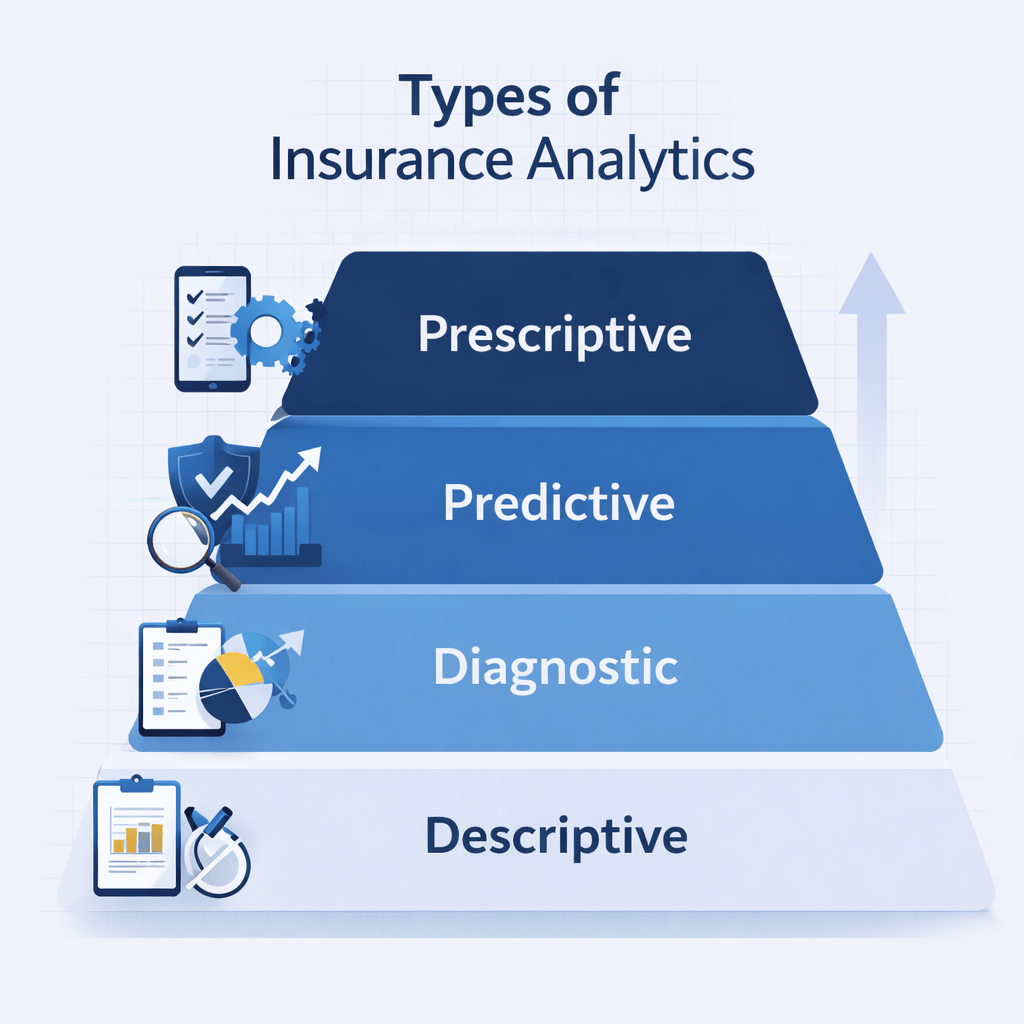
At its core, insurance analytics answers four questions:
- What happened? (descriptive analytics)
- Why did it happen? (diagnostic analytics)
- What’s likely to happen next? (predictive analytics)
- What should we do about it? (prescriptive analytics)
The metrics that matter most include loss ratios, claims cycle time, premium growth, customer lifetime value (CLV), and policy lapse rates.
For GCC and Pakistan insurers specifically, the data complexity is rising. IFRS 17 compliance, takaful reporting requirements, and regional solvency rules all demand better analytics infrastructure than most carriers currently have.
Why Insurance Analytics Matters in Pakistan and GCC
Let’s be clear: the stakes here are higher than they look.
In Pakistan, premiums generated through digital channels more than tripled in 2024, per Mettis Global. Family takaful premiums grew 37% and general takaful by 24%, pushing combined takaful premium volumes close to Rs100 billion.
That growth creates a data problem. More policies, more claims, more customers. Without solid analytics, it becomes impossible to manage risk at scale.
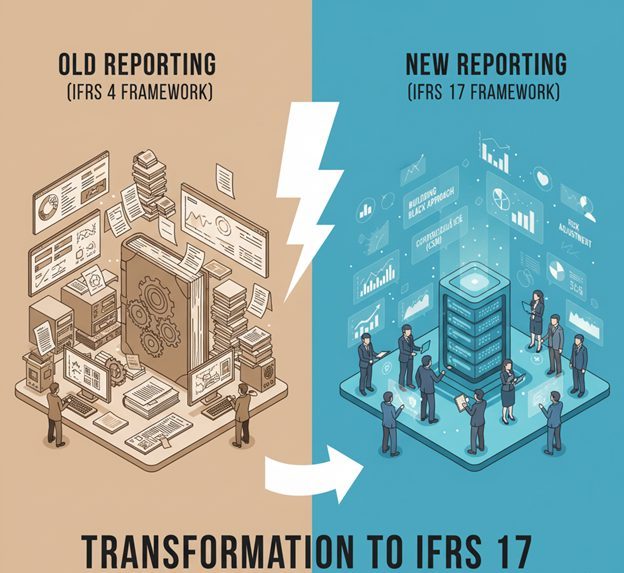
In the GCC, insurers face a different kind of pressure: regulators across Saudi Arabia, the UAE, and Qatar are tightening solvency frameworks. The shift to IFRS 17 has fundamentally changed how insurers must account for insurance contracts. IFRS 17 requires granular data on contracts, coverage, and profitability, which most legacy systems weren’t built to produce.
For reinsurers and carriers operating across both regions, the analytical gap between what regulators expect and what systems currently deliver is a genuine risk.
Key Benefits of Insurance Analytics for Insurers
Improve Risk Assessment and Underwriting
Predictive modeling lets underwriters move beyond static risk categories. By pulling in data from telematics, weather patterns, financial behavior, and claims history, you can build risk profiles that are far more precise than traditional actuarial tables.
That means better-priced policies and fewer surprises at claims time.
Faster Claims Processing and Automation
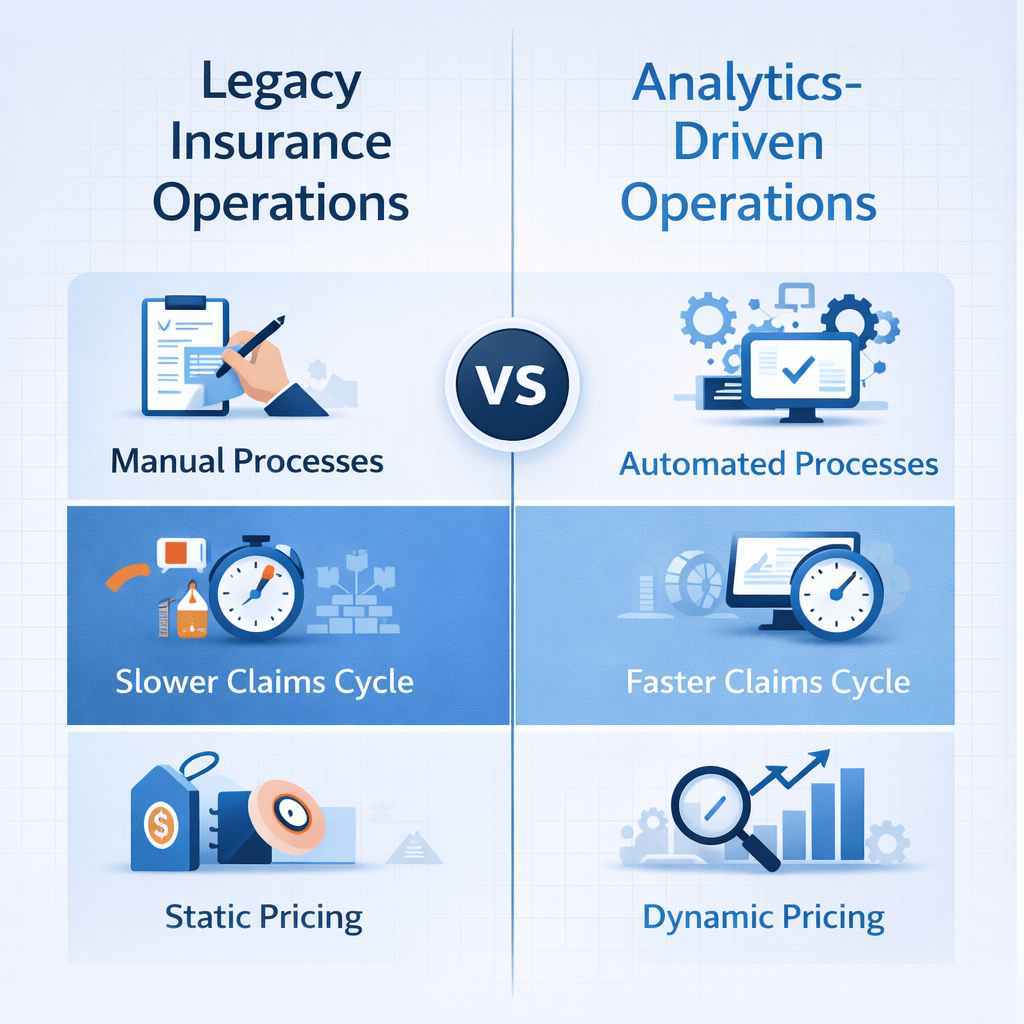
Claims analytics shortens the time from submission to settlement. Automated triage models can route straightforward claims directly to payment while flagging complex ones for adjuster review.
That speed matters to customers. It also matters to your loss ratio.
Fraud Detection and Prevention
Machine learning models can spot claim patterns that would take a human weeks to notice. Anomaly detection tools flag outliers in real time, before payouts go out the door.
In Pakistan and GCC markets where informal networks sometimes inflate claims, this kind of automated fraud detection can meaningfully protect your book of business.
Data-Driven Pricing and Profitability
Dynamic pricing models replace fixed premium schedules with real-time risk-adjusted rates. Pay-as-you-drive motor insurance is one example. Usage-based health products are another.
These models depend on good data. Insurance analytics solutions give you the infrastructure to build and run them at scale.
Core Use Cases of Insurance Analytics
Claims Analytics and Automation
Claims data analytics gives you a full view of your claims pipeline, from first notice of loss to final settlement. You can track cycle times, identify bottlenecks, and model reserve adequacy.
An accurate actuarial reserving solution sits at the heart of this process, translating claims data into credible reserve estimates that hold up under regulatory scrutiny.
Risk Management and Forecasting
Catastrophe modeling and climate risk analytics are especially relevant in the GCC, where extreme heat, flooding in coastal areas, and sandstorms create unusual property risk concentrations.
GIS-based modeling lets you map exposure geographically and stress-test your portfolio against climate scenarios.
Customer Segmentation and Personalization
CLV models help you identify which customer segments are profitable over time. Churn prediction models tell you who’s likely to lapse before they do.
With that intelligence, you can personalize retention offers, adjust channel strategy, and focus acquisition spend where it actually pays off.
Regulatory Reporting and Compliance
IFRS 17 changed the reporting game. Under the new standard, insurers must disclose the profitability of insurance contracts at a granular group level.
That requires consistent, auditable data flows from policy administration through to finance. Analytics platforms automate much of this, reducing the manual effort that currently consumes actuarial and finance teams.
Types of Data Used in Insurance Analytics
Structured vs Unstructured Data
Structured data includes policy records, claims histories, premium transactions, and actuarial tables. It’s clean, sortable, and lives in your core systems.
Unstructured data is harder to work with but often richer in signal. Customer call transcripts, social media activity, and claims photos all contain information that structured fields can’t fully capture. Natural language processing (NLP) tools can convert this raw input into usable analytics.
External and Third-Party Data Sources
External data rounds out your internal picture. Economic indicators, weather data, satellite imagery, and third-party credit scores all feed into risk models.
In Pakistan, mobile transaction data is especially valuable given the rapid growth of fintech. In the GCC, vehicle telematics and health wearable data are becoming standard inputs for usage-based products.
Latest Trends in Insurance Analytics (2026)
AI and Predictive Analytics Adoption
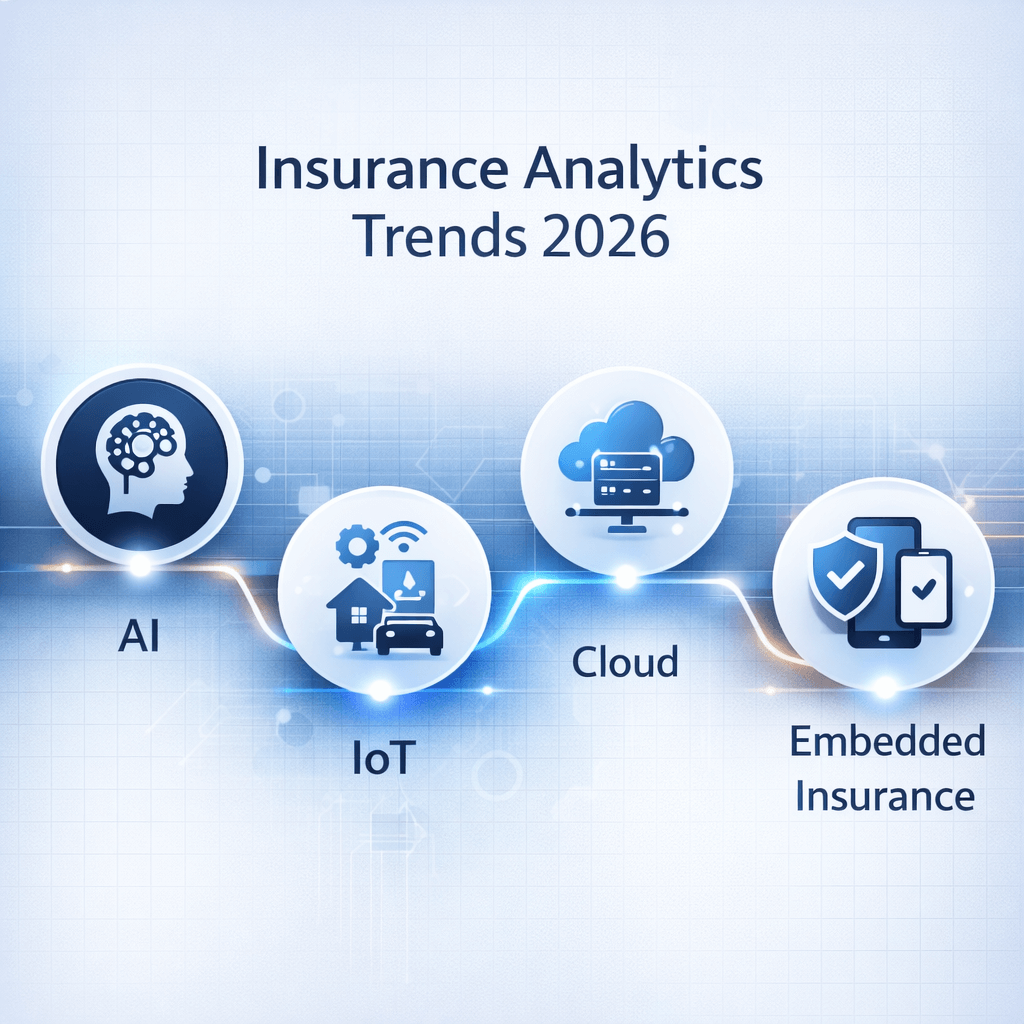
Machine learning pricing models are no longer experimental. Leading insurers in the UAE and Saudi Arabia are running AI-driven underwriting across personal lines.
The accuracy gains are meaningful: better loss ratios, tighter pricing bands, and fewer adverse selection surprises.
InsurTech and Embedded Insurance
Embedded insurance products, where coverage is bundled into purchases or services, generate continuous real-time data streams.
That data feeds directly into analytics systems, creating feedback loops that improve pricing and product design faster than traditional actuarial cycles allow.
Blockchain for Data Security
Blockchain is gaining traction as a way to secure policy data and streamline reinsurance settlements. Immutable transaction records reduce the risk of data manipulation, which is a real concern in markets where fraud is a persistent problem.
Real-Time and Cloud-Based Analytics
Cloud infrastructure has made real-time analytics accessible to mid-sized carriers, not just the large global groups. You can now run live dashboards, automated alerts, and model refresh cycles without enterprise-scale IT investment.
For Pakistan insurers moving off legacy platforms, cloud-native analytics tools offer a practical path to modernization.
How to Implement Insurance Analytics Step-by-Step
Define Business Goals and KPIs
Start with what you’re trying to fix or improve. Are you trying to reduce your combined ratio? Improve claims turnaround? Meet IFRS 17 reporting requirements?
Define the KPIs that will tell you whether analytics is working: loss ratio, claims cycle time, fraud detection rate, reserve accuracy.
Data Collection and Preparation
Audit your data sources first. You need to know what you have, where it lives, and how clean it is before you can analyze anything reliably.
ETL (extract, transform, load) processes standardize data from policy systems, claims systems, and external feeds into a central repository.
Model Development and Analysis
With clean data in place, you can build and test models. Start with a focused pilot, perhaps claims triage or fraud flagging, rather than trying to transform everything at once.
Validate models against historical outcomes before going live. Actuarial assumptions need testing, not just programming.
Deployment and Performance Monitoring
Deploy models into live workflows with real-time dashboards for performance tracking. Set automated alerts for when model outputs drift from expected ranges.
Analytics isn’t a one-time project. You’ll need to retrain models as market conditions change and as you accumulate more data.
Challenges in Insurance Analytics Implementation
Data Quality and Integration Issues
Poor data quality is the most common reason analytics projects stall. Inconsistent coding, duplicate records, and missing fields corrupt model outputs.
Data silos are the structural root cause. When policy, claims, and finance systems don’t talk to each other, analysis is limited to what lives in one silo at a time.
Regulatory and Compliance Barriers
IFRS 17 adds a layer of complexity that many analytics implementations weren’t designed to handle. The standard’s contract grouping rules and variable fee approach require specific data structures that legacy actuarial systems can’t always produce.
In Pakistan, SECP reporting requirements add additional compliance obligations that analytics systems must accommodate.
High Implementation Costs
For mid-sized carriers, the cost of replacing legacy systems and building analytics infrastructure can seem prohibitive.
That said, modular approaches, where you bolt analytics tools onto existing systems rather than replacing them, can significantly reduce initial investment.
Talent and Skill Gaps
Actuaries who can code and data scientists who understand insurance are genuinely rare. Most carriers in Pakistan and GCC face a shortage of professionals who bridge both disciplines.
Partnerships with external specialists or managed analytics providers are a practical way to close that gap without waiting years for internal talent development.
How Insurers in Pakistan and GCC Can Get Started
You don’t need to overhaul everything at once. Here’s a practical starting sequence:
- Audit your current data quality and identify the biggest gaps.
- Pick one high-value use case: claims fraud, reserve accuracy, or pricing optimization.
- Run a time-boxed pilot with clear success metrics.
- Build from there, adding use cases as confidence grows.
For insurers that need to meet IFRS 17 requirements now, the most important first step is getting your contract data structured correctly. Purpose-built insurance reserving software designed for IFRS 17 compliance can save enormous time compared to trying to retrofit legacy actuarial platforms.
Future of Insurance Analytics in Emerging Markets
Pakistan’s private sector life premiums surged 25% in 2024, per Mettis Global. That rate of growth won’t sustain itself without better risk selection and pricing discipline.
In the GCC, climate risk is moving from theoretical to operational. Extreme weather events are increasing in frequency, and regulators want insurers to prove they’re pricing that risk correctly. GIS modeling and climate-adjusted catastrophe models are moving from optional to required.
Generative AI is also starting to reshape how actuarial assumptions are tested and how customer communication is personalized. These tools aren’t production-ready for all applications yet, but their development trajectory is fast.
The insurers who invest in analytics infrastructure now, even modestly, will be far better positioned to compete as these trends accelerate.
FAQs on Insurance Analytics
What is insurance analytics?
Insurance analytics is the use of data collection, statistical modeling, and reporting tools to improve decisions across underwriting, claims, pricing, and compliance. It spans descriptive, diagnostic, predictive, and prescriptive approaches, and applies to all insurance lines.
How does predictive analytics help insurers?
Predictive analytics uses historical data and statistical models to forecast future outcomes, such as which policies are likely to produce large claims, which customers are at risk of lapsing, or how a pricing change will affect loss ratios. It turns reactive decision-making into proactive risk management.
What tools are used in insurance analytics?
Common tools include business intelligence (BI) platforms for dashboards and reporting, machine learning frameworks for predictive modeling, ETL tools for data integration, and specialized actuarial software for reserving and pricing. Cloud-based platforms like AWS, Azure, and Google Cloud are increasingly used to run these workloads at scale.
How can small insurers adopt analytics effectively?
Small insurers should start with a single, measurable use case rather than a full platform build. Focus on claims fraud detection or pricing analytics first. Use cloud-based or managed analytics services to reduce upfront infrastructure costs. External actuarial and data science partners can fill skill gaps while your internal team develops capability.
Insurance Analytics Is Not Optional Anymore
Pakistan’s insurance industry grew its total premiums to Rs677 billion in 2024, and the GCC market is facing IFRS 17 reporting demands that legacy systems can’t meet alone.
Insurance analytics gives you the tools to price better, settle claims faster, detect fraud earlier, and plan reserves with more confidence. The technology is available. The data is there.
What’s often missing is the right partner to bring it together. Prima Consulting specializes in actuarial, analytics, and digital transformation for insurers in Pakistan and the GCC.
Talk to our team about building your analytics roadmap. Reach out through Prima Consulting to see how we can help your organization move from data collection to data-driven decisions.