TL;DR
Think about the last time a financial process slowed your team down. Maybe it was a loan approval sitting in someone’s inbox for days. Maybe it was a compliance report that required three rounds of manual fixes before it was right. These aren’t random problems; they’re signs that your processes need structure. Business process management consulting gives finance teams a clear path forward. It helps you identify where your workflows break down, redesign them with purpose, and connect the right tools to keep things running. As financial institutions face tighter regulations, growing transaction volumes, and pressure to transform digitally, getting your processes right isn’t optional. This guide breaks down what business process management consulting means for finance, why it matters, and how to put it to work.
Introduction to Business Process Management Consulting in Finance
Think about the last time a financial process slowed your team down. Maybe it was a loan approval sitting in someone’s inbox for days. Maybe it was a compliance report that required three rounds of manual fixes before it was right. These aren’t random problems; they’re signs that your processes need structure.
Business process management consulting gives finance teams a clear path forward. It helps you identify where your workflows break down, redesign them with purpose, and connect the right tools to keep things running. As financial institutions face tighter regulations, growing transaction volumes, and pressure to transform digitally, getting your processes right isn’t optional.
This guide breaks down what business process management consulting means for finance, why it matters, and how to put it to work.
What Is Business Process Management in Finance?
Business process management consulting, at its core, is the practice of identifying, analyzing, redesigning, and continuously improving the processes that drive financial operations. It’s not just about automation or technology. It’s about getting clarity on how work actually moves through your organization and making sure that movement is intentional.
In finance, this covers everything from how invoices get processed to how risk assessments get completed. The BPM consulting firms that specialize in financial services bring a structured method to this work: they document what’s happening, identify where the gaps are, redesign the process, and then support implementation.
What makes this different from general IT consulting or operations work is the discipline behind it. Business process management consulting focuses on the full lifecycle of a process, from discovery through continuous improvement. That lifecycle approach is what gives finance teams lasting results, not just short-term fixes.
Here’s the thing: the BFSI sector leads the BPM market with around 34.3% of market share in 2025. That’s not a coincidence. Financial organizations deal with complex, high-stakes processes where errors cost money and compliance failures cost even more.
Why Business Process Management Matters for Financial Institutions
Finance teams operate under a level of scrutiny that most other functions don’t face. Regulators require documentation. Auditors want trails. Customers want speed. All of that pressure lands on your processes.
Without a structured approach to managing those processes, you end up with fragmented workflows, siloed data, and teams that spend more time firefighting than doing actual financial work.
Business process management consulting helps you step back and look at the full picture. It shows you where manual steps are slowing things down, where approval chains are too long, and where automation could take over routine tasks without adding risk.
The numbers back this up. Accounting and finance lead the BPM market by business function with around 26.9% of market share in 2025. That level of adoption reflects how widely finance teams have recognized the value of getting their processes in order.
On top of that, over 40% of finance professionals say automating purchasing and procurement processes is a top priority. That shift from reactive to proactive process management is what business process management consulting makes possible.
Core Components of Business Process Management
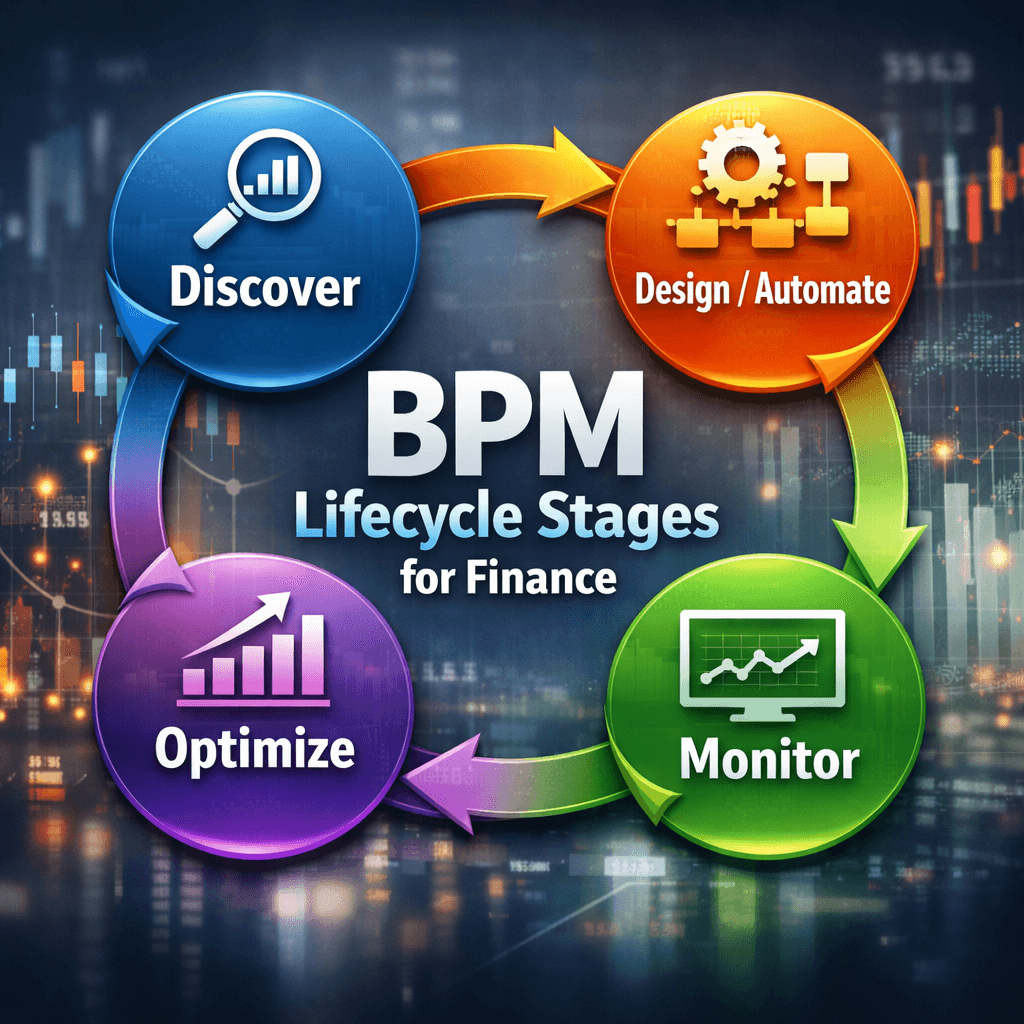
Process Discovery and Mapping
Before you can fix a process, you need to understand it. Process discovery involves documenting every step in a workflow, who’s responsible, what systems are involved, and where the handoffs happen.
In finance, this often reveals surprises. Steps that were assumed to take one day actually take four. Approvals that were designed as a checkpoint have become a bottleneck. Mapping gives you a clear, honest view of what’s really happening.
Process Automation and Workflow Design
Once you know what your current process looks like, business process management consulting helps you design a better version. That new design often includes automation for rule-based tasks, clearer ownership for decision points, and tighter integration between systems.
The goal isn’t to automate everything. It’s to remove friction where automation adds value and to keep humans in the loop where judgment matters. Financial planning and analysis consulting, for example, often combines automated data pulls with human review for accuracy and context.
Process Monitoring and Performance Tracking
A process that gets redesigned and then forgotten will drift. Teams work around it, exceptions pile up, and before long you’re back to where you started. Monitoring keeps that from happening.
Business process management consulting builds in metrics from the start. You’re tracking cycle times, error rates, cost per transaction, and exception volumes. These aren’t just dashboards; they’re early warning systems for when a process is starting to break down.
Continuous Process Optimization
Process management is not a one-time project. Regulations change. Systems get updated. Business volume grows. The processes that work today may need adjustment in six months.
That’s why continuous optimization is a core part of bpm consulting services. You set up a regular review cadence, look at your performance data, and make adjustments before small issues become big problems.
Key Benefits of Business Process Management in Finance
Faster Financial Operations
Manual handoffs, paper-based approvals, and duplicate data entry slow finance teams down. Business process management consulting identifies those friction points and removes them.
When cycle times shrink, your team can close books faster, process payments more quickly, and respond to customer requests without delays. Speed becomes a competitive advantage, not just a convenience.
Stronger Risk and Compliance Control
Compliance failures in finance carry serious consequences. A well-managed process builds controls directly into the workflow so that nothing gets missed. Approval requirements, data validation checks, and audit trails aren’t add-ons; they’re part of the process design.
Business process management consulting also prepares you for regulatory change. When a new requirement comes in, you can trace exactly which processes are affected and update them systematically rather than scrambling.
Better Process Visibility and Reporting
One of the biggest pain points in finance is not knowing where a transaction or report is in the workflow. Business process management consulting gives you real-time visibility so that managers and teams always know the status of key processes.
That visibility also feeds into reporting. Instead of pulling data manually from multiple systems, you get consolidated dashboards that show performance across your entire operation.
Lower Operational Costs
Rework is expensive. Manual errors, duplicate steps, and inefficient handoffs all add cost without adding value. Business process management consulting directly targets those cost drivers.
The Accounting and Finance segment is forecast to represent 24.5% of total BPM market share in 2026. That sustained investment reflects the real cost savings finance teams are achieving through better process management.
Common Use Cases of BPM in Financial Services
Customer Onboarding and KYC Processes
Onboarding a new client in financial services involves identity checks, document collection, risk scoring, and account setup. Without a structured process, each step becomes a potential delay or compliance risk.
Business process management consulting redesigns onboarding workflows so that each step is clear, documented, and connected. Know Your Customer (KYC) checks run in parallel where possible. Missing documents trigger automated follow-ups rather than waiting for someone to remember.
Loan and Credit Approval Workflows
Loan approvals involve multiple stakeholders, data pulls from different systems, and credit assessment criteria that change over time. A poorly managed process leads to inconsistent decisions and slow turnaround.
With BPM in place, loan workflows run on defined rules. Applications move through stages based on data, not on who’s available. Exceptions get flagged and routed to the right reviewer automatically.
Payment and Transaction Processing
Payment workflows are high-volume and high-risk. An error in a payment process, whether a duplicate transaction or a failed fraud check, can have immediate financial and reputational consequences.
Business process management consulting builds anti-fraud checks, approval gates, and reconciliation steps directly into payment workflows. Cross-border transactions get the same level of visibility and control as domestic ones.
Risk Management and Regulatory Compliance
Risk teams in finance need consistent, repeatable processes for identifying exposures, running assessments, and reporting to regulators. Ad hoc approaches don’t hold up under scrutiny.
BPM gives risk management a structured backbone. Assessments run on schedule. Findings route to the right owners. Reports generate automatically from process data rather than requiring manual compilation.
How Business Process Management Consulting Supports Finance Teams
Process Assessment and Gap Analysis
The first step in any business process management consulting engagement is understanding where you are today. Consultants map your current workflows, interview process owners, and look at performance data to identify where things are breaking down.
That gap analysis gives you a prioritized picture of what to fix first. Not everything needs to change at once. Good business process management consulting helps you focus on the processes with the highest impact on cost, risk, or customer experience.
Workflow Redesign and Automation Strategy
With the gaps identified, consultants work with your team to design improved workflows. That includes deciding which steps to automate, where to add controls, and how to connect processes across systems.
The automation strategy piece is where bpm consulting services get specific about tools. Should this step use robotic process automation? Does this data handoff need API integration? These decisions shape the implementation plan.
Technology Integration and Implementation
Business process management consulting doesn’t stop at design. The implementation phase connects your redesigned workflows to the tools your team already uses, whether that’s an ERP system, a cloud accounting platform, or a risk management application.
Getting this integration right is where many process improvement projects fail. Business process management consulting brings the technical and operational expertise to bridge the gap between process design and working technology.
Technologies That Power Modern BPM in Finance
Robotic Process Automation (RPA)
RPA handles rule-based, repetitive tasks that previously required manual effort. In finance, that means data entry, report generation, invoice matching, and account reconciliation can all run without human intervention.
The key is using RPA as part of a broader business process management consulting strategy, not as a standalone fix. RPA works best when the underlying process is clean and well-documented first.
Artificial Intelligence in Financial Workflows
AI adds decision-making capability to financial processes. It can flag unusual transactions, predict cash flow patterns, or route approvals based on risk scoring. That moves BPM beyond simple automation into intelligent process management.
The BFSI sector is projected to grow at the highest CAGR of 20.1% during the forecast period in the BPM market. Much of that growth is driven by AI and advanced analytics adoption in financial workflows.
Process Analytics and Reporting Tools
Process analytics platforms give you live data on how your workflows are performing. You can see where bottlenecks are forming, which steps are generating the most exceptions, and how performance trends over time.
Business process management consulting uses these tools to set up monitoring frameworks so that your team doesn’t have to dig through data manually to understand what’s happening in your operations.
Steps to Implement Business Process Management in Finance
Identify High-Impact Processes
Start with the processes that are causing the most pain. That might be the month-end close taking too long, or loan approvals sitting in queues for days. Business process management consulting helps you prioritize based on impact rather than just what’s loudest.
A structured process inventory, looking at all your financial workflows and scoring them by volume, risk, and inefficiency, gives you a roadmap for where to focus first.
Map and Analyze Current Workflows
Once you’ve identified priority processes, map them in detail. Document every step, every decision point, every system involved. This is where business process optimization basics start: you can’t improve what you haven’t documented.
The mapping phase often surfaces issues that weren’t visible before. Redundant approval steps, manual data re-entry between systems, and unofficial workarounds that have become standard practice all show up in a thorough process map.
Automate and Integrate Systems
With a clear picture of the current state and a redesigned target process, you’re ready to bring in the tools. That might mean configuring your ERP to handle more workflow logic, deploying an RPA bot for repetitive data tasks, or moving to cloud bookkeeping for better accessibility and control.
The integration strategy is where bpm services overview in GCC-based organizations often differs from global implementations: regional regulatory requirements, Arabic language support, and local banking system integrations all need to factor in.
Monitor Performance and Improve Continuously
After implementation, set up the monitoring framework discussed earlier. Track your key metrics. Review them regularly. And when performance starts to drift, use the data to understand why and fix the root cause, not just the symptom.
The bpm optimization process works best when it becomes a habit rather than a project. Regular process reviews, built into your operational calendar, keep your workflows sharp over time.
Challenges in Implementing BPM in Financial Organizations
Legacy System Integration
Many financial institutions run on core banking or ERP systems that were built decades ago. Connecting modern BPM tools to legacy infrastructure is one of the most common technical challenges in any business process management consulting engagement.
The solution usually involves a combination of middleware, APIs, and phased migration. You don’t have to replace everything at once. Good business process management consulting builds a path from where you are to where you want to be.
Data Security and Regulatory Requirements
Finance processes handle sensitive customer data, transaction records, and confidential financial information. Any process redesign or automation initiative has to account for data security requirements and the specific regulations that apply to your organization.
Business process management consulting brings compliance expertise into the process design phase so that security controls are built in from the start, not bolted on afterward.
Organizational Change Management
Process change affects people. When workflows are redesigned and steps are automated, team members need to understand why, how their roles are changing, and what skills they need to work effectively in the new environment.
This is where many BPM projects run into trouble. The technology works, but adoption lags because change management wasn’t part of the plan. Business process management consulting that includes training, communication, and stakeholder engagement produces far better results than technical implementation alone.
The Future of Business Process Management in Finance
The pace of change in financial services isn’t slowing down. Regulatory requirements keep growing. Customer expectations for speed and transparency keep rising. And the technology landscape, from AI to cloud platforms to real-time payments infrastructure, keeps evolving.
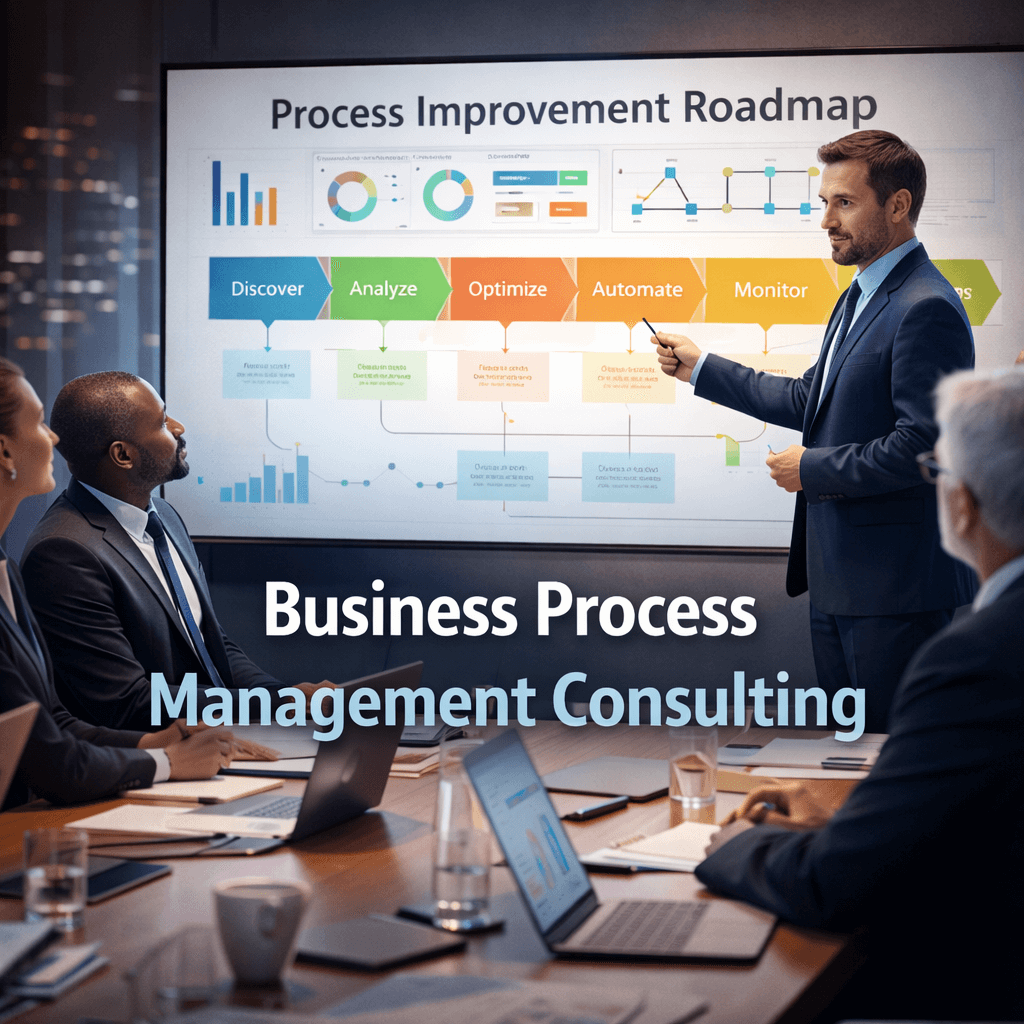
Business process management consulting sits at the center of all of that. It’s the discipline that makes digital transformation stick. You can invest in the best technology in the world, but if the processes feeding that technology are broken, the investment won’t deliver.
Looking ahead, business process management consultant roles are becoming more strategic. They’re not just documenting workflows. They’re helping finance leaders build process governance frameworks, define process ownership across functions, and build the internal capabilities for continuous improvement.
What is bpm consulting for financial workflows going to look like in five years? More real-time. More data-driven. And more tightly connected to the broader goals of financial planning and analysis consulting, risk management, and digital transformation programs.
The organizations that invest in getting their processes right now will have a significant operational advantage as the financial services industry continues to change.
Frequently Asked Questions About BPM in Finance
What is BPM consulting for financial workflows?
BPM consulting for financial workflows is a service that helps finance teams map, redesign, automate, and monitor their core processes. It covers everything from loan approvals to compliance reporting, with the goal of making financial operations faster, more accurate, and more controlled.
How does business process management consulting support digital transformation?
Digital transformation in finance depends on clean, well-structured processes. Business process management consulting creates the foundation: it documents current workflows, removes inefficiencies, and designs the process architecture that new technologies like AI, RPA, and cloud platforms can actually run on.
Which finance processes benefit most from BPM?
The highest-impact areas include customer onboarding, loan and credit approvals, payment processing, month-end close, financial reporting, and regulatory compliance workflows. These are high-volume, high-risk processes where structured management delivers measurable results.
What’s the difference between BPM, workflow automation, and RPA in finance?
BPM is the overarching discipline that covers process design, governance, and improvement. Workflow automation is a tool within BPM that routes tasks and documents based on rules. RPA automates specific repetitive tasks within a process. Business process management consulting coordinates all three so they work together rather than in isolation.
How do you measure BPM success in finance?
Key metrics include process cycle time, error rate, cost per transaction, compliance exception count, and straight-through processing rate. Business process management consulting sets up these metrics during implementation so you have a baseline and can track improvement over time.
What are common BPM implementation challenges in finance?
The most frequent challenges are legacy system integration, data security requirements, change management across teams, and maintaining process discipline over time. A structured business process management consulting approach addresses each of these directly rather than treating them as afterthoughts.
Why Business Process Management Consulting Is the Starting Point for Finance Transformation
Finance teams that want to operate faster, manage risk better, and meet growing regulatory demands can’t afford to leave their processes to chance. Business process management consulting gives you the structured approach to make that improvement systematic rather than reactive.
From process discovery and workflow redesign to automation strategy and performance monitoring, business process management consulting covers the full lifecycle of operational improvement in finance. It’s the work that makes every other investment in technology and talent actually deliver.
If your finance function is dealing with slow processes, compliance gaps, or operational inconsistency, the time to act is now. Prima Consulting brings deep expertise in business process management consulting for financial organizations. Get in touch to see what your processes could look like with the right structure in place.