TL;DR
ERM consulting services help GCC businesses identify, assess, and manage every material risk across their operations. With the GCC risk management market set to reach USD 14.9 billion by 2031, choosing the right partner is a strategic decision, not just a procurement one. This guide covers what these services include, what features and regional expertise to look for, and how to compare providers based on GCC regulatory knowledge and analytical depth. You’ll also find a practical ERM checklist and answers to the questions businesses ask most. Read on to make a confident, informed decision.
Best ERM Consulting Services for GCC Businesses
Your business faces real risks every day. Regulatory changes in Saudi Arabia, volatile oil prices, cyber threats, and new IFRS reporting standards are not theoretical problems. They’re active pressures that affect your capital, your reputation, and your long-term growth. That’s where ERM consulting services come in.
Choosing the right partner to build and run your enterprise risk management framework can be the difference between reactive damage control and genuine strategic advantage. This guide breaks down what these services include, what to look for, and how GCC businesses can make the right choice.
What Are ERM Consulting Services?
ERM consulting services help businesses identify, assess, and manage risks across all operations. They go beyond simple audits or compliance checklists.
These services bring together risk frameworks, data tools, regulatory knowledge, and expert analysis. The goal is to give your leadership team a clear, structured view of every material risk your business faces.
For GCC businesses, that means applying global best practices like the COSO framework and ISO 31000 guidelines to regional realities. Think local regulatory regimes, currency exposures, and sector-specific pressures in insurance, banking, and infrastructure.
In short, ERM consulting services turn risk from a compliance burden into a business tool.
Who we are
50+ years of combined IFRS, risk, and actuarial expertise
Prima Consulting serves banks, insurers, and corporates across Saudi Arabia, UAE, Pakistan, Ireland, and Europe — delivering IFRS advisory, ECL modelling, risk management, and audit support.
Why GCC Businesses Need ERM Consulting Services
The GCC risk management market is growing fast. According to Mobility Foresights, the GCC Enterprise Risk Management Market is projected to grow from USD 6.8 billion in 2025 to USD 14.9 billion by 2031, at a CAGR of 13.6%.
That growth reflects a real shift. GCC businesses aren’t just expanding, they’re dealing with more complex risks than ever before.
The GCC risk management consulting market was valued at USD 973.11 million in 2024 and is projected to grow at a CAGR of 8.0%, per Cognitive Market Research. That’s a significant investment signal for any business operating in the region.
For added context, LinkedIn data puts the GCC risk management market CAGR at 14.2% through 2025-2033, making it one of the fastest-growing consulting segments globally.
Here’s what’s driving that demand:
- Stricter regulatory requirements from SAMA, CBUAE, and regional insurance authorities
- IFRS 17 compliance timelines affecting insurers across UAE and Saudi Arabia
- Rising cyber risks across banking, energy, and public sector organizations
- Economic diversification under Vision 2030 creating new operational risk exposures
- Rating agency scrutiny pushing businesses toward mature ERM programs
That said, many organizations still treat ERM as a compliance exercise rather than a strategic tool. That gap is exactly where the right enterprise risk management consulting partner adds real value.
Prima Consulting
Need expert guidance on this topic? Our advisory team is available for a free initial consultation.
No obligation · Responds within 1 business day · GCC, Europe & APAC
Key ERM Consulting Services for Risk Management
Understanding what’s included in a quality ERM engagement helps you compare providers and avoid gaps. Here are the core service areas you should expect.
Enterprise Risk Assessment and Identification
This is the foundation. A consulting team runs a structured process to surface all material risks across your business, from financial and operational to strategic and emerging.
Good risk identification goes beyond interviews. It uses scenario analysis, external benchmarking, and data modeling to find risks you may not have considered.
Risk Evaluation and Prioritization
Not every risk deserves the same attention. Risk evaluation uses quantitative and qualitative methods to score and rank exposures by likelihood and impact.
For GCC businesses, this means calibrating those scores against local market conditions, currency risks, and sector-specific factors that global models may not capture well.
ERM Framework Design and Implementation
A solid framework gives your risk program structure. Most consultants work with COSO or ISO 31000 standards, but the real value is in how they adapt those frameworks to your specific business model.
Well-designed erm frameworks connect risk oversight to business planning, capital allocation, and governance. That connection is what separates a mature program from a compliance tick-box.
Core Components of a Strong ERM Framework
A framework on paper does nothing. Six pieces have to work together, or the whole thing collapses the first time a real risk shows up.
Start with governance: who actually owns risk decisions, and at what level of the org chart. Then risk appetite, the board-approved statement of how much risk your business will tolerate in pursuit of growth. Identification comes next, followed by assessment, where each risk gets scored for likelihood and impact.
Response is where most programs get lazy. Accept, avoid, reduce, or transfer. Pick one, and be honest about why. Monitoring and reporting close the loop, feeding lessons back into governance so the framework actually evolves.
We have seen GCC firms build beautiful frameworks that skip straight from identification to reporting, with no real response step in between. That gap is where losses happen.
Prima’s enterprise risk management services build all six components into one connected system, not six separate documents nobody reads twice.
Regulatory Compliance and Governance Support
GCC regulators have raised the bar. SAMA’s risk management guidelines, CBUAE frameworks, and insurance authority requirements all demand structured governance and regular reporting.
ERM consulting services help you build the governance structures, policies, and documentation needed to meet those requirements without creating unnecessary overhead.
Risk Monitoring, Reporting, and Controls
Ongoing monitoring is where many programs fall short. Risk assessments done once a year quickly become outdated in fast-moving markets.
A quality enterprise risk management consulting partner sets up real-time or near-real-time monitoring systems, defines key risk indicators, and builds reporting structures that keep your board informed.
The Enterprise Risk Management Process, Step by Step
Most GCC businesses can name their top three risks in a meeting. Fewer can walk you through the actual process that got them there, and that gap is exactly what separates a mature program from a gut-feel one.
Identify and Assess
Step one is identification: teams across the business systematically surface threats, from market volatility to a single vendor going under. Step two scores each risk on two axes, likelihood and impact. Larger firms lean on heat maps and stress testing here. Smaller ones often skip straight to opinion, which is where the process breaks down first.
Prioritize and Respond
Not every risk gets equal airtime. Step three ranks them so resources go where they matter. Step four picks a response: accept, avoid, reduce, or transfer. A bank might transfer cyber exposure through insurance and reduce operational risk through process controls in the same quarter.
Monitor and Report
Step five is ongoing monitoring, built on key risk indicators and automated alerts rather than an annual review nobody remembers by June. Step six is reporting, feeding management, the board, and sometimes regulators. The quality of that reporting often decides how fast a firm can actually move when something breaks.
Then the loop closes. Every cycle should feed lessons back into identification criteria and governance, not just get filed away.
This is the same six-step structure Prima applies inside our ERM services for insurers, adapted for whichever sector you operate in.
Key Features to Look for in ERM Consulting Services
You might be wondering, with so many providers in the market, what actually separates a good ERM firm from a great one?
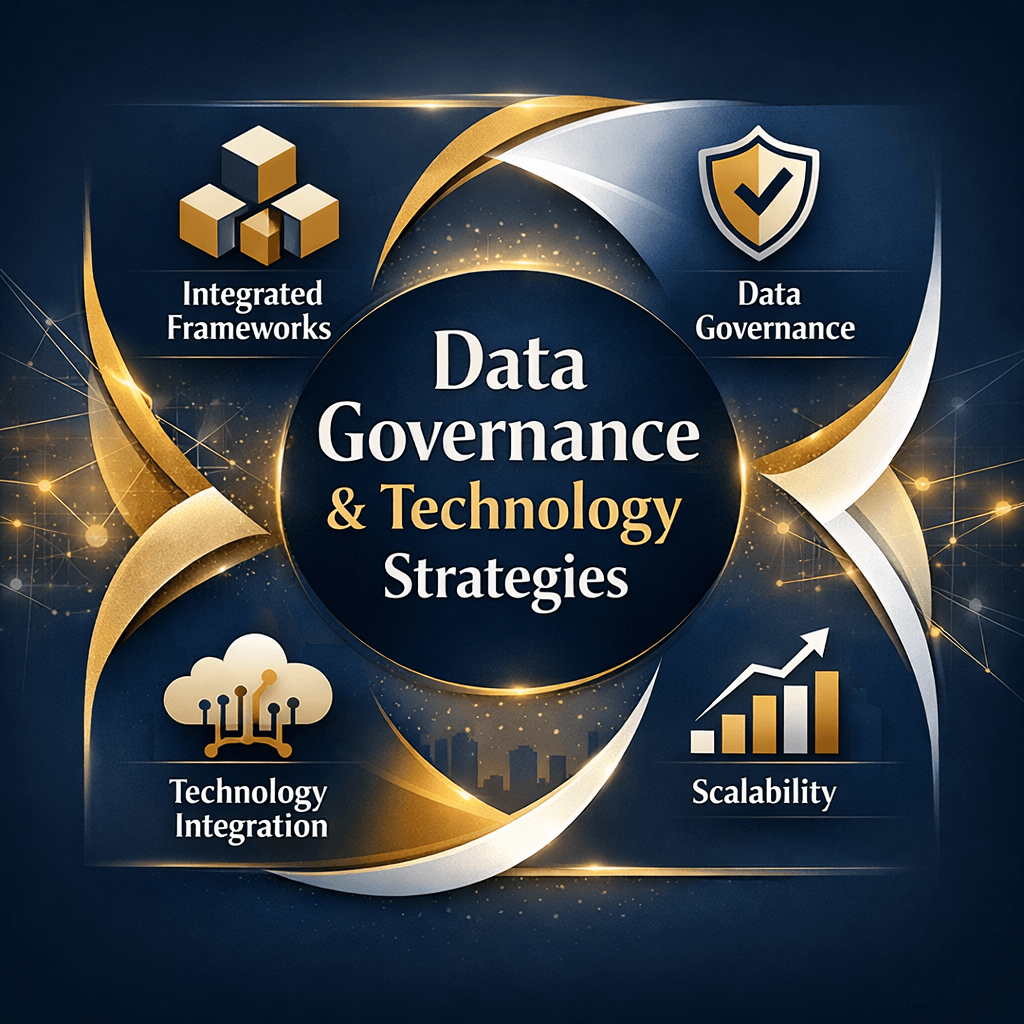
Integrated Risk Management Frameworks
Look for firms that don’t just design frameworks on paper. The best ERM consulting services build integrated programs that connect risk data to strategy, finance, and operations in a practical way.
That integration is what lets your leadership team make risk-informed decisions without needing a consultant in the room every time.
Data Security and Risk Data Governance
Risk data is sensitive data. Your ERM partner needs strong practices around data classification, access controls, and governance to protect it.
This matters more in the GCC where cross-border data regulations are evolving and financial institutions face strict data residency requirements.
Technology Integration and Risk Analytics
Modern enterprise risk management solutions use AI, machine learning, and cloud-based platforms to process large volumes of risk data. Ask potential partners how they use technology.
What’s interesting is that the best firms don’t just drop software on your team. They integrate risk analytics into your existing ERP and reporting systems so risk data flows naturally into decisions.
Scalability for Growing GCC Businesses
Your risk profile will change as your business grows. A good consulting partner builds frameworks and systems that scale with you, without requiring a full rebuild every few years.
This is especially relevant for GCC businesses expanding across borders or entering new sectors under Vision 2030 diversification programs.
Explore our advisory services
How ERM Consulting Services Improve Compliance and Operations
Beyond risk identification, here’s how ERM consulting services create real value across your organization.
Stronger Decision-Making Through Risk Insights
When leadership has clear visibility into the risk landscape, they make better decisions. Enterprise risk management solutions give you data-driven insights rather than gut-feel risk management.
That shift from reactive to proactive decision-making is one of the most cited benefits among businesses that invest in mature ERM programs.
Improved Regulatory Compliance in GCC Markets
According to Source Global Research, the GCC consulting market grew at 13.2% in 2023, with regulatory compliance services among the top growth drivers.
ERM consultants reduce your compliance risk by building audit-ready documentation, automating reporting workflows, and keeping your program current with regulatory updates.
Operational Risk Reduction and Efficiency
Operational risks include process failures, vendor dependencies, and human error. Risk management services that cover operations help you spot weak points before they cause disruptions.
The result isn’t just fewer incidents. It’s more efficient operations because teams aren’t constantly firefighting problems that should have been anticipated.
Reputation and Strategic Risk Management
Reputational risks are harder to quantify but just as real. A failed compliance event, a data breach, or a major operational failure can damage your market position and client trust.
ERM consulting services help you map strategic and reputational risks explicitly so they get the same management attention as financial risks.
How to Choose the Best ERM Consulting Services in the GCC
Let’s break it down. Here are the criteria that matter most when selecting a partner for enterprise risk management services.
Evaluate Industry and Regulatory Expertise
GCC-specific regulatory knowledge is non-negotiable. Your consultant must understand SAMA, CBUAE, and sector-specific requirements, not just adapt global templates.
Ask for specific examples of IFRS 17 implementation work, SAMA ERM guideline alignment, or capital modeling for regional insurers. That track record matters.
Assess Risk Modelling and Analytical Capabilities
Strong enterprise risk assessment consultants bring quantitative modeling skills: capital modeling, stress testing, morbidity modeling for insurers, and scenario analysis.
These capabilities are what let you go beyond qualitative risk registers and actually measure your financial exposure to specific risk events.
Check Integration With Existing Risk Systems
A new ERM framework that lives in isolation won’t drive real change. The best risk management solutions integrate with your existing ERP, finance systems, and reporting platforms.
Ask how the consultant manages that integration and what their approach is to data quality and consistency across systems.
Review Knowledge Transfer and Training Support
The best ERM partnerships don’t create dependency. Look for consultants who prioritize training your internal teams to run and evolve the program over time.
This is a key factor in getting long-term value from your investment in risk management services.
Compare Service Scope and Long-Term Value
Risk management services pricing in the GCC varies based on scope, firm size, and specialization. Don’t select purely on price.
Look at total value: the depth of the framework, the quality of analytics, the regulatory track record, and the ongoing support model. A cheaper engagement that misses key risks can end up costing far more.
Common Enterprise Risk Management Challenges in GCC Businesses
Even well-resourced businesses run into the same patterns when building ERM programs. Knowing these challenges up front helps you avoid them.
Limited Historical Risk Data
Many GCC markets are relatively young compared to Western financial markets. That means limited historical data for calibrating risk models accurately.
Experienced ERM consulting services address this by combining regional data with international benchmarks and using stress testing to model scenarios with limited historical precedent.
Misalignment Between Risk and Business Strategy
Risk programs that operate in isolation from strategic planning fail to add value. Your ERM framework needs to connect directly to your business objectives and capital allocation decisions.
This alignment is one of the areas where external enterprise risk management consulting brings the most immediate value, because they facilitate conversations between risk, finance, and strategy that often don’t happen naturally.
Managing Emerging and Non-Financial Risks
Cyber risks, ESG exposures, geopolitical risks, and climate-related financial risks are all growing in importance but often left out of traditional ERM programs.
The best GRC services for modern businesses address these non-financial risks explicitly, with frameworks and monitoring that go beyond balance sheet exposures.
Adapting Global Frameworks to GCC Regulations
Applying global ERM frameworks without local adaptation is one of the most common mistakes GCC businesses make. COSO and ISO 31000 provide strong foundations, but they need mapping to SAMA guidelines, CBUAE requirements, and local insurance regulations.
An experienced risk management consulting partner does that translation work rather than delivering a generic global template.
Siloed Risk Data and a Weak Risk Culture
Most ERM programs fail quietly, not dramatically. The usual cause is siloed data: credit risk sits in one system, operational risk in a spreadsheet, cyber risk in a dashboard nobody outside IT ever opens.
Fix that with a centralized platform and shared data standards, so one number means the same thing across departments. Culture matters just as much. If front-line staff never see risk outcomes tied to their own performance metrics, they stop flagging problems early. And once that stops, the whole program is just paperwork.
Talent Gaps and Frameworks That Never Get Updated
Static frameworks are the other repeat offender. A framework built in 2022 rarely reflects the AI tools, regulatory updates, or market shifts of 2026. It needs a real refresh cycle, not a five-year assumption that nothing changed.
Talent is the harder problem. Building ERM expertise in-house takes years most businesses don’t have. That’s usually where external governance and risk advisory support earns its fee fastest, bridging the gap while your own team comes up to speed.
Types of Enterprise Risk an ERM Program Must Cover
Ask five people at the same company to define “risk” and you will get five different answers. That is the actual problem ERM solves.
Financial, Operational, and Compliance Risk
Financial risk covers credit, market, liquidity, and interest rate exposure, the most quantified category but still evolving with GCC rate cycles. Operational risk means process failures, human error, and vendor dependencies. Compliance risk comes from missing a regulatory requirement, whether that’s an AML rule or an IFRS reporting deadline. None of these three live in isolation. A compliance gap almost always has an operational root cause.
Cybersecurity and ESG Exposure
Cyber risk has moved from an IT problem to a board-level one across GCC financial services. One bank in a 2025 PwC global banking study cut anti-money-laundering hit processing time from an hour down to 20 seconds using AI, which tells you how fast this category is moving.
ESG risk gets tracked alongside financial risk now, not after it. Climate disclosure requirements, supply chain ethics, and governance failures all carry real financial exposure, and GCC regulators are paying closer attention every year.
We will be honest: quantifying reputational and ESG risk in hard numbers is still more art than science industry-wide. Anyone who claims otherwise is selling something.
Prima folds cyber and climate exposure into the same ESG reporting and advisory work that feeds your broader ERM program, so nothing gets tracked twice in two different systems.
The Role of Data and Technology in Modern ERM
Technology has changed what’s possible in enterprise risk management solutions. Here’s what that means in practice.
Risk Analytics and Predictive Modelling
Machine learning and advanced analytics let ERM programs shift from backward-looking reporting to forward-looking prediction. Predictive models use historical patterns, macroeconomic indicators, and real-time data to flag risks early.
For GCC businesses in financial services, this includes credit risk modeling, insurance claims prediction, and capital adequacy forecasting.
Cyber Risk and Technology Governance
Cyber risks in the Middle East have grown significantly. Financial institutions, energy companies, and government-linked entities are frequent targets of sophisticated attacks.
Modern ERM consulting services integrate cyber risk into the broader risk framework rather than treating it as a separate IT problem. That means quantifying cyber exposure in financial terms and embedding technology governance into your overall risk appetite.
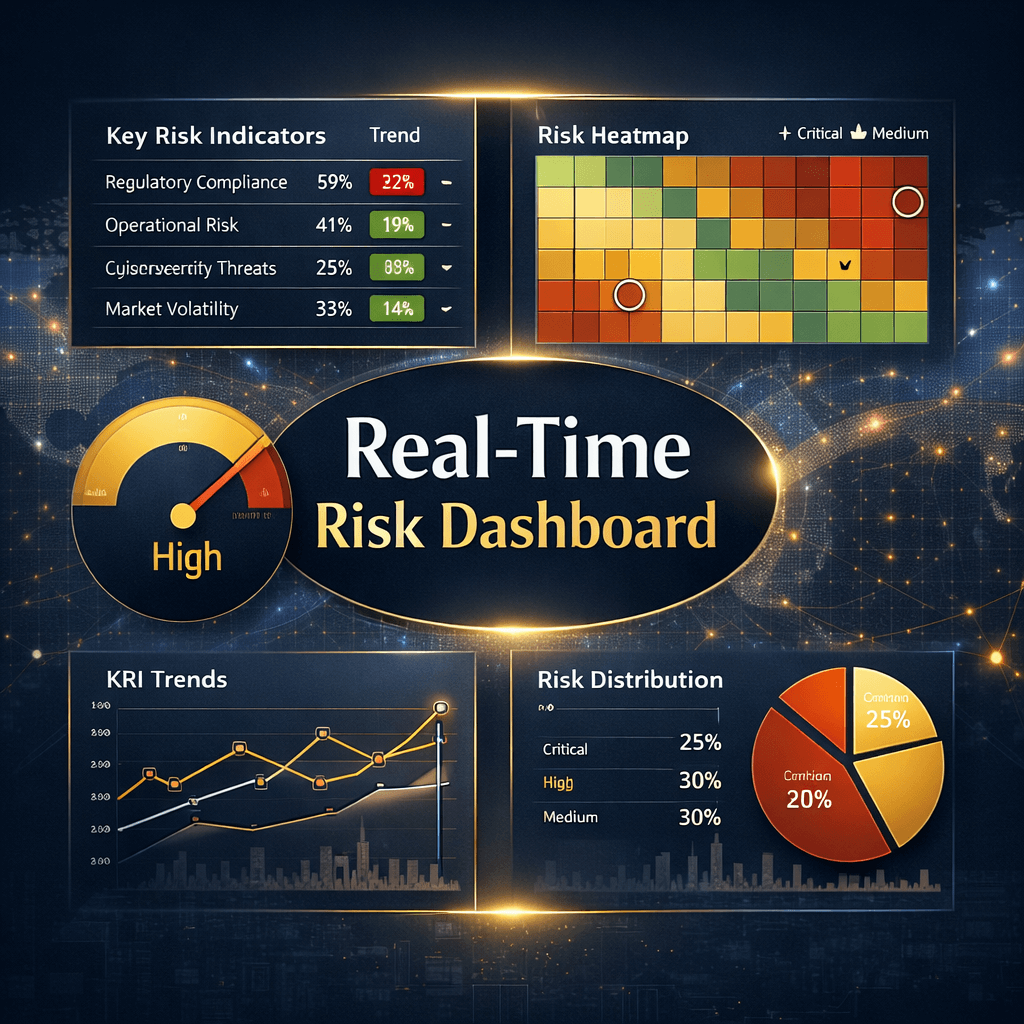
Data-Driven Risk Monitoring and Reporting
Real-time risk monitoring platforms give your leadership team up-to-date visibility into key risk indicators. Cloud-based tools let you monitor across business units, geographies, and asset classes at the same time.
That data-driven approach also improves board reporting. Instead of periodic written summaries, boards receive structured dashboards that flag material risk changes as they occur.
Risk Governance and the Three Lines of Defense
Governance answers one blunt question: who gets called when a risk threshold gets breached at 11pm on a Thursday? If nobody in your org can answer that instantly, governance is the gap, not the framework itself.
Most financial institutions run on a three-lines-of-defense model. Business units own risk day to day, on the front line. The risk function provides independent oversight, checking that first line honestly. Internal audit sits behind both, providing assurance to the board that the whole system actually works.
Risk appetite sits above all three. It’s a board-level call, not a risk-department call, and it should flow down into every product and business-line decision below it.
Reporting closes the loop. Good risk reporting doesn’t just show what already went wrong. It gives decision-makers the data to act before it does, which is the entire point of building a program in the first place.
Culture is the part hardest to put in a framework document. If front-line staff flag issues early and managers weigh risk trade-offs before signing off, the framework works. If risk stays a four-letter word nobody says out loud in meetings, it doesn’t, no matter how well the document reads.
Prima builds this governance structure directly into our internal audit and ERM governance engagements, so the three lines actually talk to each other instead of filing separate reports nobody cross-checks.
Enterprise Risk Management Checklist for GCC Businesses
Use this checklist to assess your current risk program or evaluate a potential ERM consulting partner.
Financial and Market Risk Exposure
- Have you mapped all material financial risks including currency, credit, and market exposures?
- Do you have quantified risk limits and monitoring thresholds in place?
- Is stress testing conducted at least annually against extreme but plausible scenarios?
Regulatory and Compliance Requirements
- Are you current with SAMA, CBUAE, and sector-specific regulatory requirements?
- Do you have IFRS 17 compliance frameworks in place if applicable?
- Is your governance documentation audit-ready and regularly updated?
Operational and Strategic Risk Factors
- Are operational risks mapped at the process level with controls assigned?
- Is your risk program connected to your strategic planning and capital allocation process?
- Do you have a formal risk appetite statement approved by the board?
Technology and Cybersecurity Risks
- Is cyber risk quantified in financial terms within your ERM framework?
- Do you have a technology governance policy covering data residency and access controls?
- Are your risk monitoring systems integrated with existing ERP and finance platforms?
Capital Adequacy and Stress Testing
- Do you have a capital modeling process that reflects your actual risk profile?
- Are stress tests scenario-based and forward-looking rather than just historical?
- Is capital adequacy reviewed against both regulatory requirements and internal risk appetite?
ERM and IAS 19: Managing Pension and Employee Benefit Risk
Here’s a risk category most ERM programs quietly ignore: pension liability. IAS 19, the IFRS standard covering employee benefits, connects directly to enterprise risk for any GCC firm running a defined benefit plan or an end-of-service gratuity scheme.
Actuarial assumptions under IAS 19, discount rates, mortality tables, salary growth estimates, all carry real financial risk. Get the discount rate wrong by even half a percentage point and your reported liability can swing by millions. That’s not a rounding error. That’s a capital adequacy problem.
Underestimating pension or gratuity liabilities affects more than the balance sheet. It touches regulatory capital ratios, credit ratings, and sometimes M&A valuations, which is exactly why this belongs inside your risk register and not off to the side in an actuarial appendix nobody reads until year end.
For GCC and UAE financial firms specifically, folding IFRS liability assessments into ERM is becoming less optional as regional regulators keep aligning with international standards. We’d argue it should have been standard practice years ago.
This is where Prima’s actuarial background actually earns its place in an ERM conversation. Our employee benefits valuation work feeds pension and gratuity risk straight into the same framework covering your credit, market, and operational exposures, not a separate silo your finance team has to reconcile manually.
Free Consultation
Ready to discuss your specific situation?
Prima’s advisors work with organisations across the GCC, Europe, and Asia-Pacific. First conversation is always free — no pitch, just expertise.
Frequently Asked Questions About ERM Consulting Services
What is enterprise risk management (ERM)?
Enterprise risk management is a structured approach to identifying, assessing, and managing all material risks across an organization. It connects risk oversight to strategy, operations, and capital planning rather than treating risk as a standalone compliance function.
What are the five components of ERM?
The COSO ERM framework defines five key components: governance and culture, strategy and objective-setting, performance, review and revision, and information, communication, and reporting. Together, these give organizations a complete view of their risk environment and decision-making framework.
What is the enterprise risk management process?
The ERM process runs through five stages: identify risks across all business areas, assess each risk for likelihood and impact, prioritize risks based on severity, put mitigation or control strategies in place, and monitor and report on risk status on an ongoing basis.
What types of risks are covered under ERM?
ERM covers financial risks like credit, market, and liquidity; operational risks including process failures and technology breakdowns; strategic risks tied to business decisions and market position; compliance and regulatory risks; and emerging risks like cyber threats and ESG-related exposures.
How does ERM differ from traditional risk management?
Traditional risk management works in silos, with separate teams handling credit, market, and operational risk on their own timelines. ERM ties every risk type into one framework connected to strategy and governance, so nothing gets managed in isolation from the rest of the business.
How do risk management basics apply to insurers?
For insurers, core risk management covers actuarial reserve risk, underwriting risk, catastrophe exposure, and investment risk. These feed directly into regulatory capital models under Solvency II or local GCC equivalents, alongside IFRS 17 reserving requirements insurers already report against.
How do ERM consulting services support GCC businesses?
ERM consulting services bring regional regulatory knowledge, quantitative modeling capabilities, and structured enterprise risk management consulting frameworks specifically adapted to GCC market conditions. They help businesses go beyond compliance to genuinely protect assets, improve decision-making, and build competitive resilience.
Build Risk Resilience That Drives Real Business Value
The GCC risk landscape is evolving fast. Regulatory pressure, cyber threats, and economic diversification are all raising the bar for how businesses manage risk.
The right ERM consulting services don’t just check compliance boxes. They build programs that connect risk insight to business decisions, protect capital, and give your leadership team the confidence to act.
Whether you’re selecting a partner for the first time or reviewing an existing program, the criteria in this guide will help you make a better choice.
Prima Consulting brings deep GCC expertise, proven actuarial and ERM capabilities, and a commitment to knowledge transfer that helps your team own the program long-term. Connect with Prima Consulting to discuss your ERM needs and find out how we can support your business.